
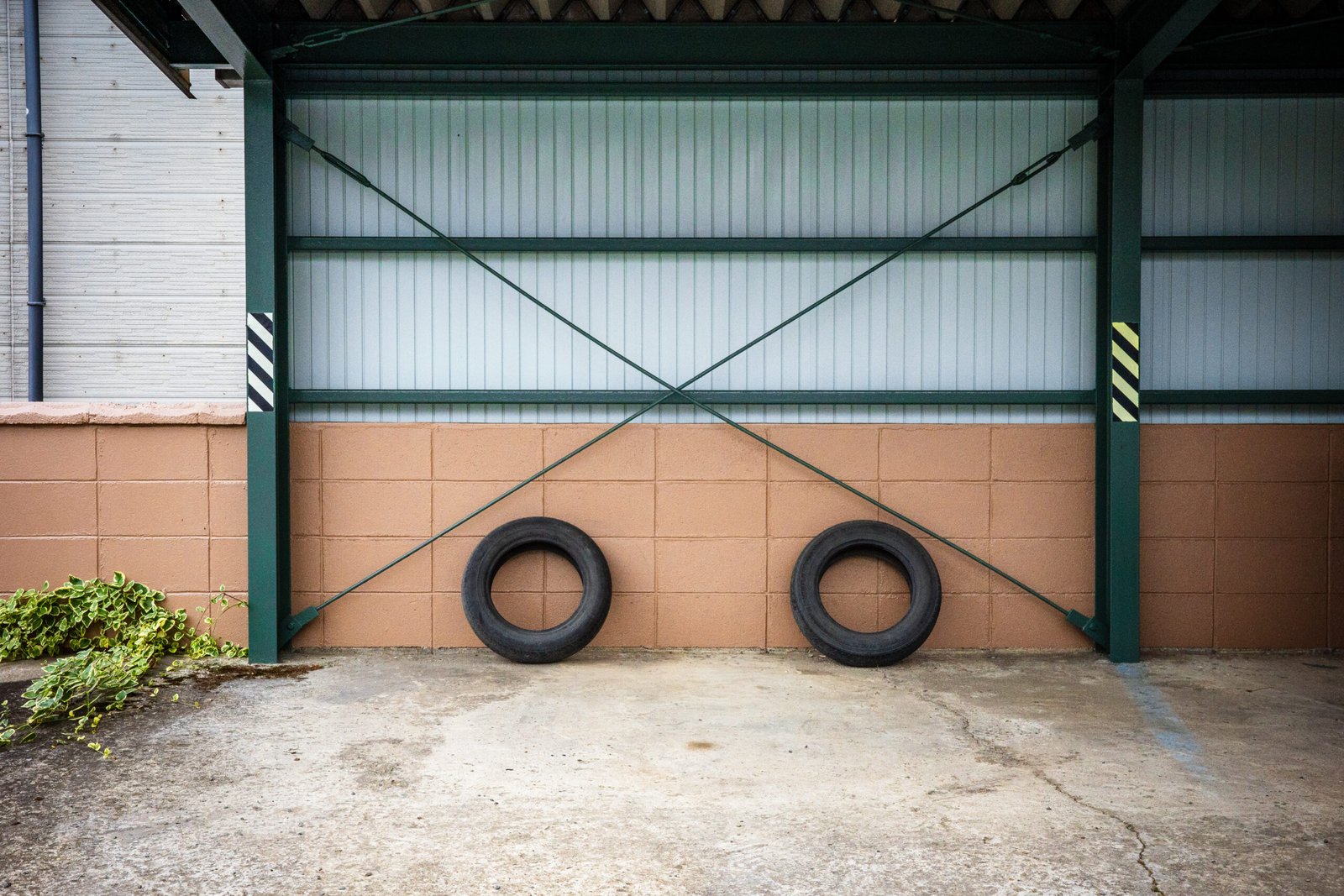
One of the things I love most about Japan is the variety of vehicles you see on the roads. Among the four-wheeled, motorized kind, I’m especially fond of the kei car, which is a type of mini car required to conform to government limits on size, weight, engine displacement, and horsepower. The kei car was introduced after WWII to encourage consumers to buy cars, and to thereby boost the Japanese auto industry and the overall economy. I’d say it worked.
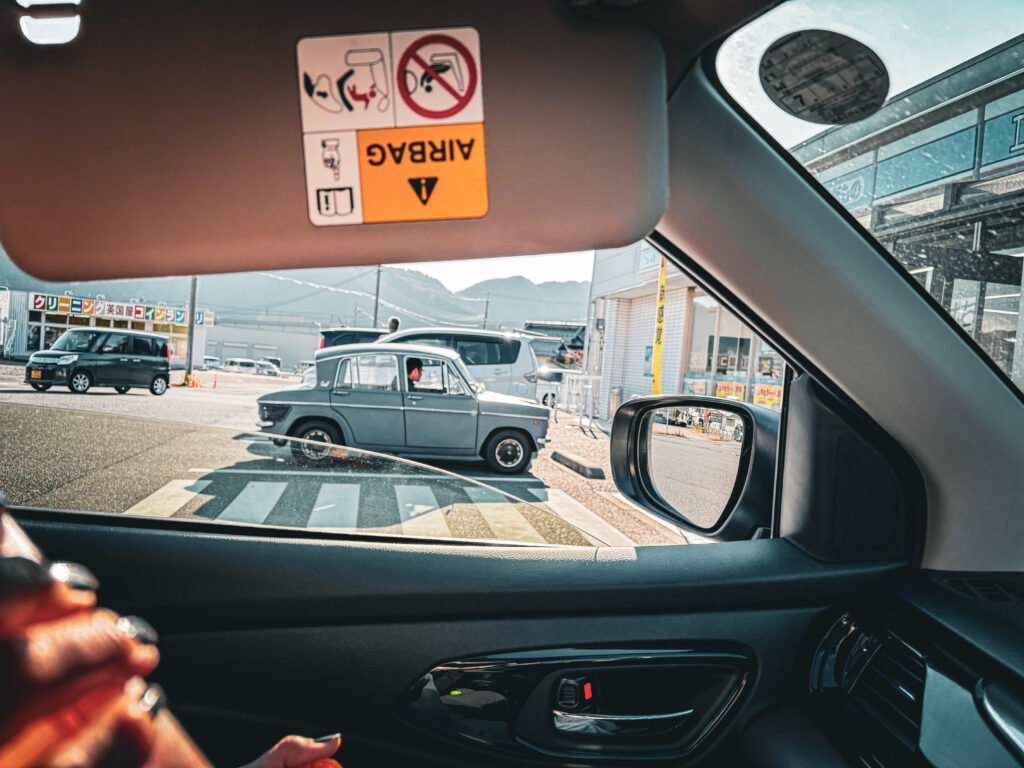
This is an early 1960’s Matsuda (Mazda) model, the Carol.
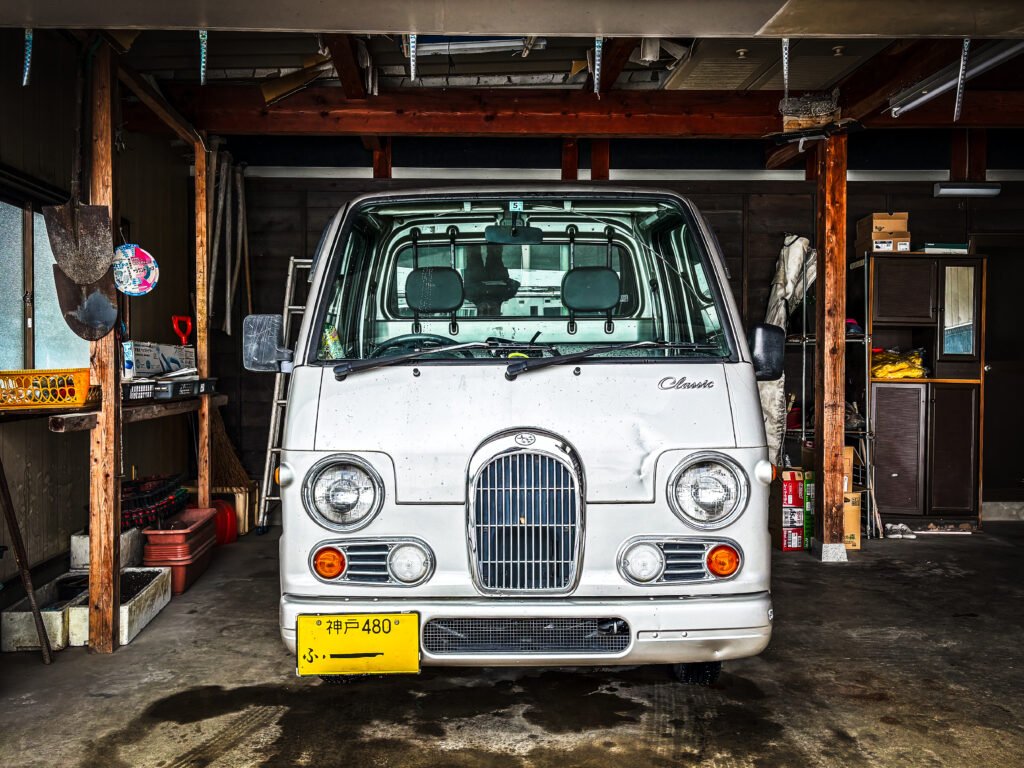
And this is a Subaru Sambar cabover (flatbed) truck, from the same era.
Since the early days of the kei car, Japanese automobile makers have been challenged to develop quality vehicles within the government-imposed constraints, continuously improving them in a highly competitive market. Today, many Kei cars are loaded with features that make them extremely convenient, safe (considering their small size), and fun to drive. What’s more, they’re cheap to buy and maintain, are fuel efficient, receive discounted insurance rates and road tolls, and are exempt from stringent parking rules. No wonder that roughly 40% of new cars sold in Japan are kei cars.
I really want one — perhaps too much. I’ve been known to embarrass my wife by lurking in parking lots and inspecting people’s kei cars, sometimes making her take a photo of me with one of the models I’m considering. “Look at that poor woman, married to a weird foreigner with a car fetish!” Fortunately, she’s good humored about it.
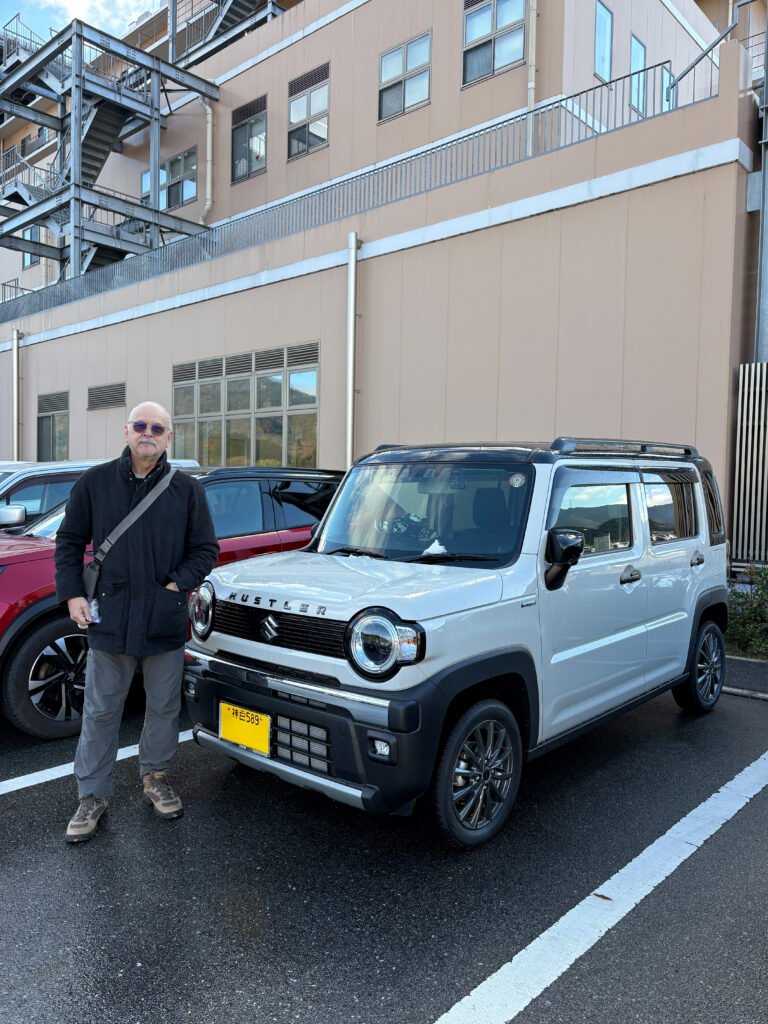
That’s me with a total stranger’s Suzuki Hustler, specifically the “Tough Wild” trim (what a name!) with four-wheel drive, roof rails, and waterproof interior fabrics. It’s like a baby Hummer, except it’s fuel efficient (20.5 km/l, or 47 US mpg) and cheap (about the equivalent of US$ 15,000 brand new). It comes with a little “Tough Wild” emblem affixed to the rear hatch door, which to me is like branding the butt of a koala bear with a skull and crossbones: ridiculous and sad, but it doesn’t destroy the appeal of the thing it’s attached to, even while making you feel sorry for it.
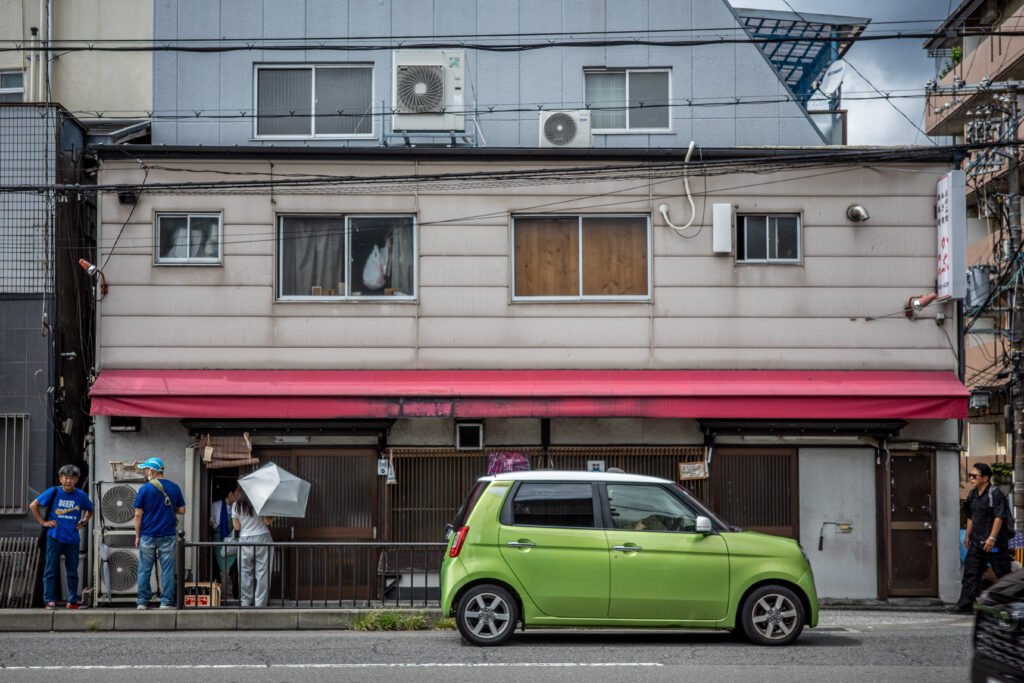
The other car I’m considering is a version of the little green machine pictured above — the Honda N One. If Ikea made a car that you could bring home in boxes and assemble with an Allen wrench, this is what it would look like. I love its intentional retro-minimalist design. It’s not a “crossover” from another category of car (unlike the Hustler), nor is it trying to cater to a demographic or impress anyone. It’s emphatically just a car. Twenty years from now it will still look good, and will likely still be running. There’s an outstanding EV version available, and I’ve got my eye on that, in plain white. With generous government incentives for EVs it’s about the same price as a Hustler.
I confess to feeling a little guilty for thinking about cars so much. My wife and I already own a car: a big, new, luxury sedan that’s super comfortable cruising on highways and is also surprisingly fuel-efficient. Because we’re retired, neither of us has to drive anywhere regularly, so sharing a car would seem to be the sensible thing to do. The problem is that she chose the car (which is fine; we’d always said we’d eventually each have our own car) and I’ve found that it doesn’t suit me at all, to say the least.
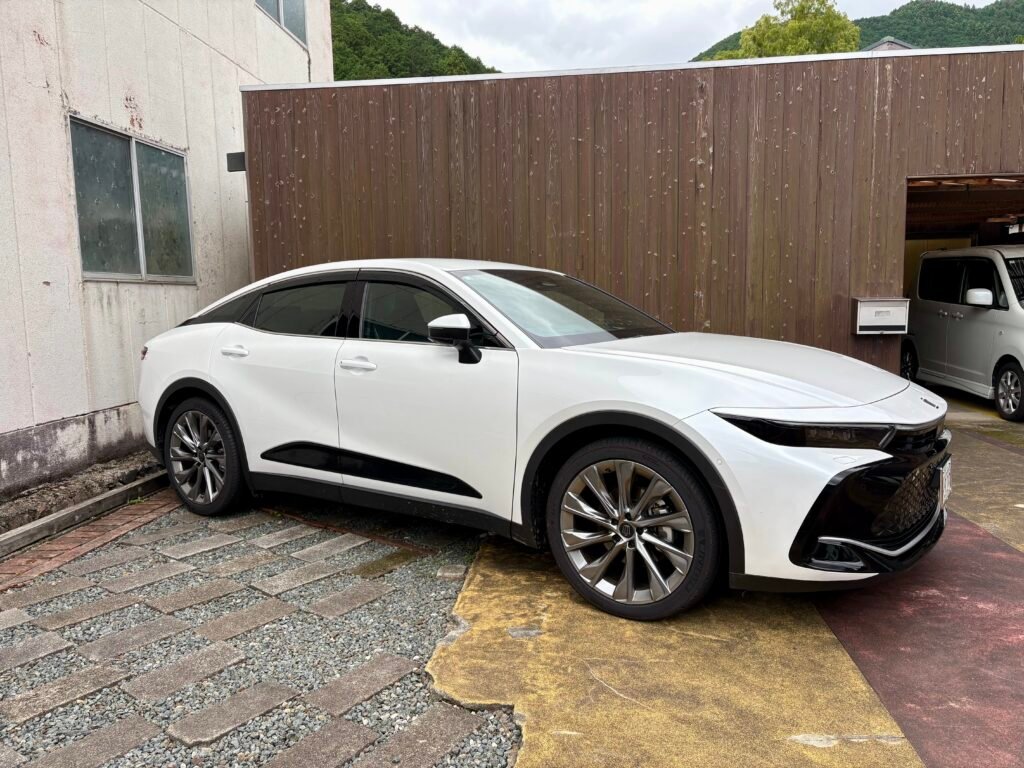
Yes, gliding along the expressway in a living room on wheels can be enjoyable, but I long to explore the winding back roads in something more nimble and exciting. Mind you, before coming to Japan I imagined getting myself one of these:
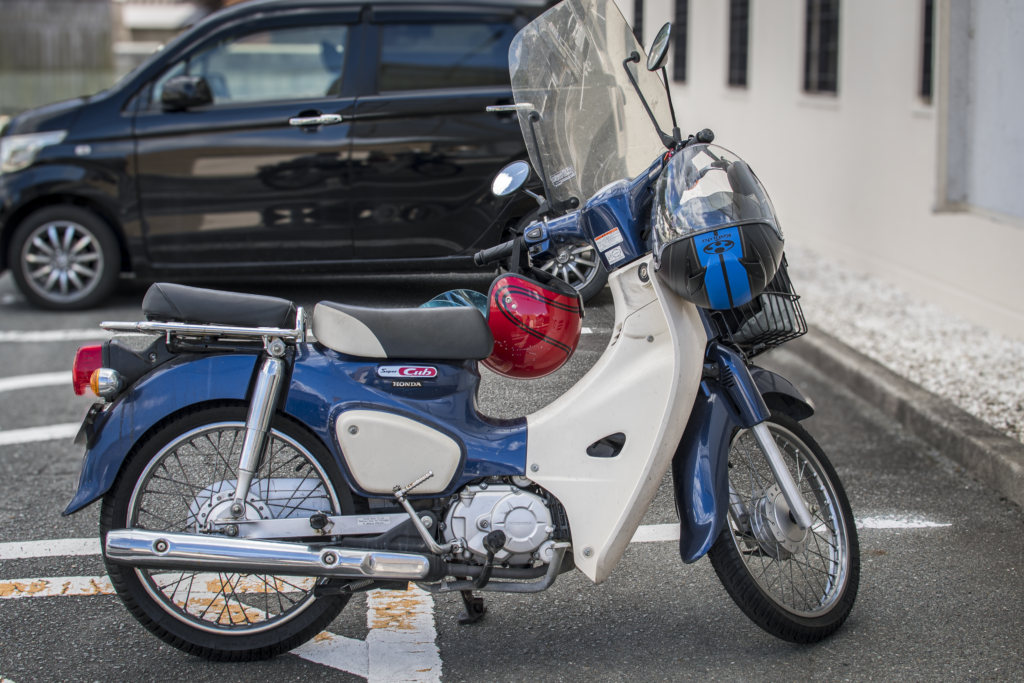
That’s the world’s all-time best selling model of motorcycle, the Honda SuperCub. It’s a truly impressive little machine. I wanted a Cub so badly that I went through the trouble of getting my motorcycle license in the US just before I moved to Japan. Unfortunately, near the end of the post-license advanced training I made a beginner’s mistake on the course and took a spill, sustaining a broken rib, broken wrist, and a concussion. This was while doing only twenty miles per hour and wearing a helmet — under supervision. After that incident, I don’t know if I’ll ever buy a SuperCub. I’ve had to admit that, despite being in great shape for my age, at sixty-seven I may no longer have the eyesight, reflexes, and balance needed to ride safely — not even on a light motorcycle on Japan’s ultra-safe roads. Maybe I’m not there yet, but I will be, probably sooner than I’ll recognize. Still, every time I encounter a SuperCub my heart sinks. I think about them even more than I think about kei cars.
Why does being wise so often feel like crap?
But that’s alright. I’m saving up for my kei car, and I’ve started using an alternative form of two-wheeled transportation to explore those back roads.
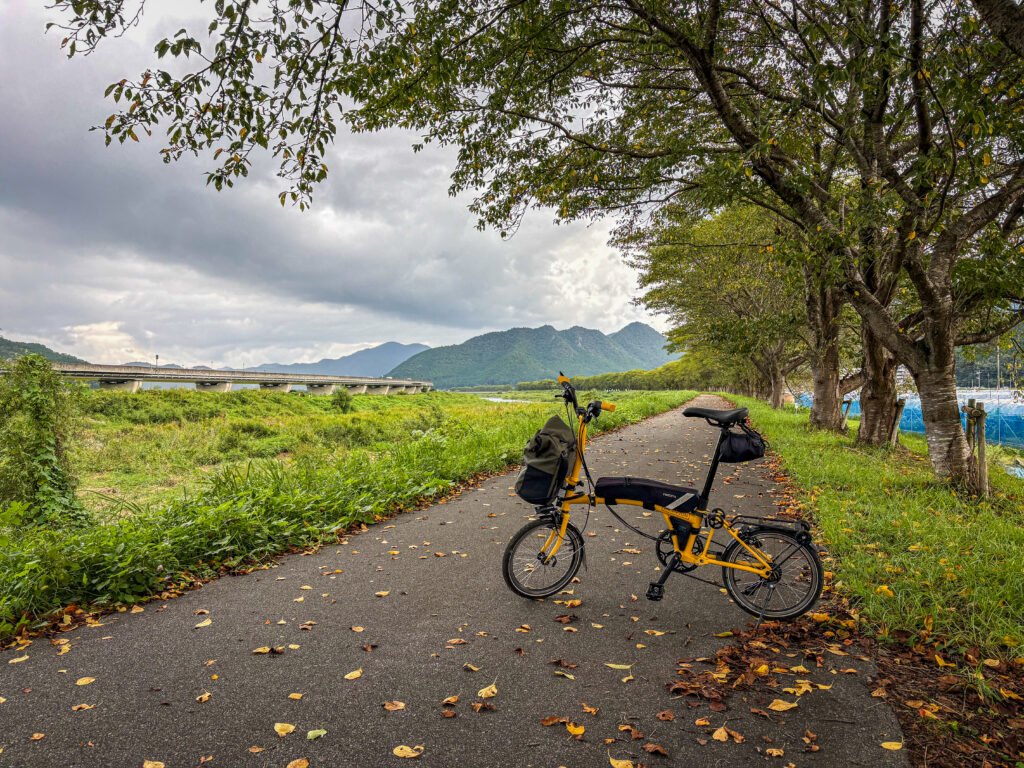
It’s a Brompton C-Line twelve-speed folding bicycle, which I’ve named “The Bumblebeast,” for its bright yellow and black colors and sturdy steel frame. Once folded, I can slip it into a “Rinko” bag and bring it with me on a train or bus, or throw it in the back of my future kei car, and thus have access to more places in Japan than I ever could via any other single means of transportation. Plus I get good exercise. To illustrate how splendid it is to own one of these things: Today my wife and her friend invited me, on the spur of the moment, to join them for lunch in a neighboring town thirteen kilometers away. They were about to leave, and I noted that the weather was perfect for a ride, so I quickly folded The Bumblebeast and put it in the car trunk (someday I’ll write about why people carry so many umbrellas in their trunks), and off we went. After lunch I retrieved the bike, unfolded it, and rode home on the path along the river, where I stopped to take this photo.
Ain’t that tough and wild? SuperCub owners, eat your hearts out.