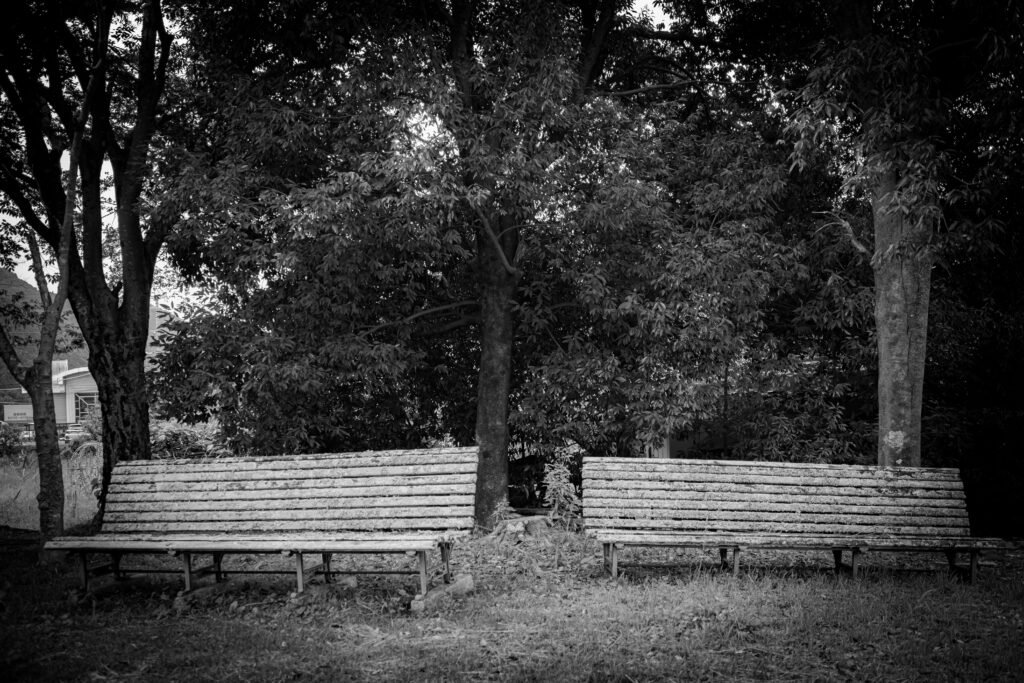
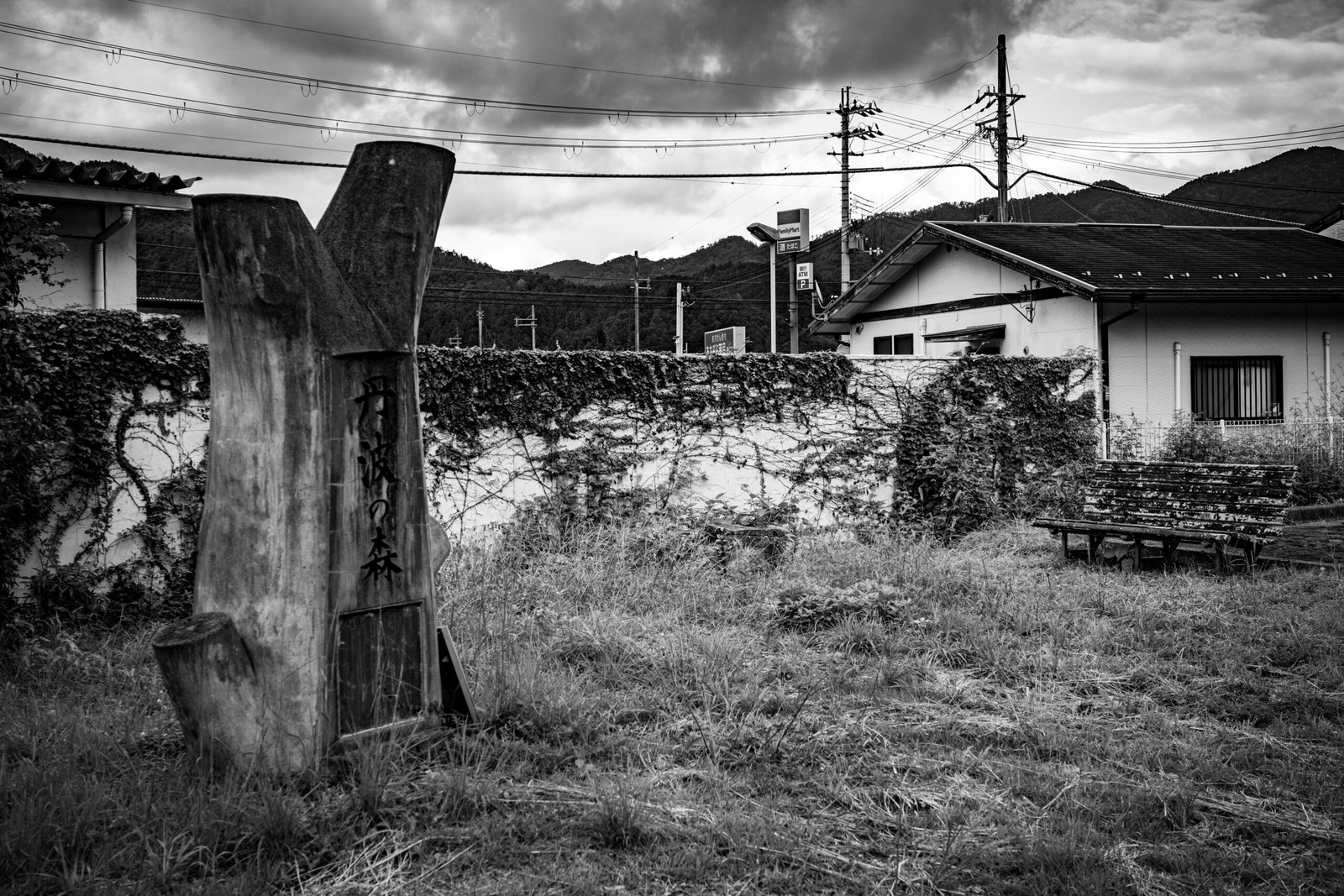
A long time ago, people in my village created resting places with little benches where anyone could just stop and sit.
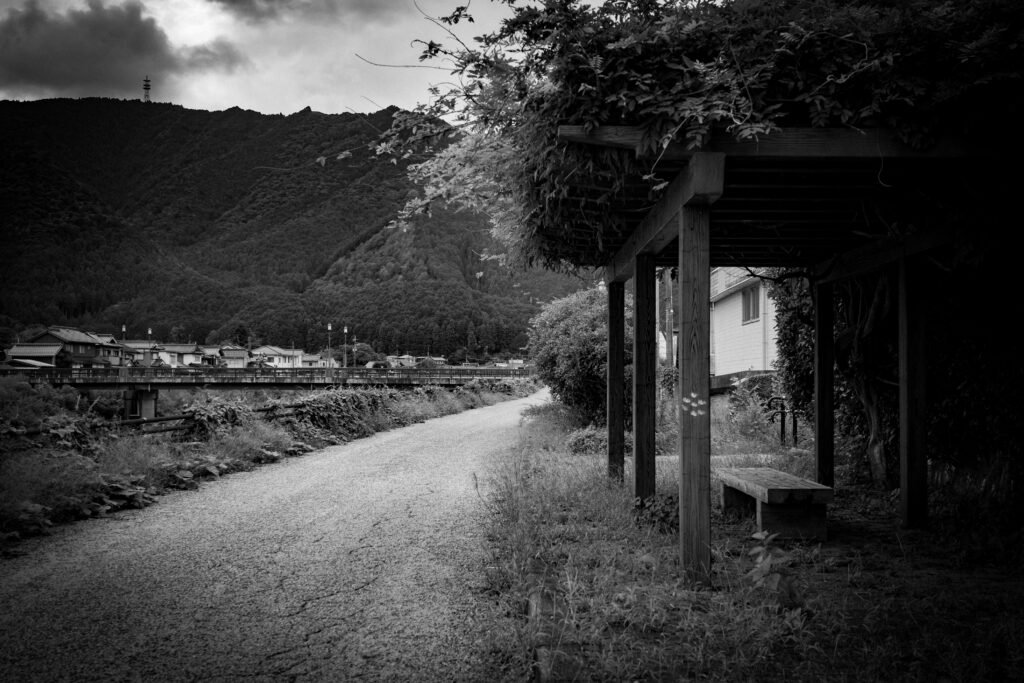
I’ve never seen a person sitting in them, although I myself am a regular at this one:
I go there because it’s a good place to surreptitiously consume packaged snacks and beverages, which I sometimes crave and buy at a nearby Lawson convenience store. I never expect to see anyone else at this resting place (which of course is why I go), though school children on bicycles sometimes pass by and politely greet me, no doubt wondering what I’m doing in a place where no one ever goes. What I’m usually doing, aside from eating, is worrying that my wife is about to track me down using my phone’s location sharing and find me munching on a microwaved hot dog, or something equally delicious and evil.
Today, while I was sitting there enjoying sweet buns filled with red bean paste and a can of coffee, I thought about why no one goes to these kinds of places anymore.
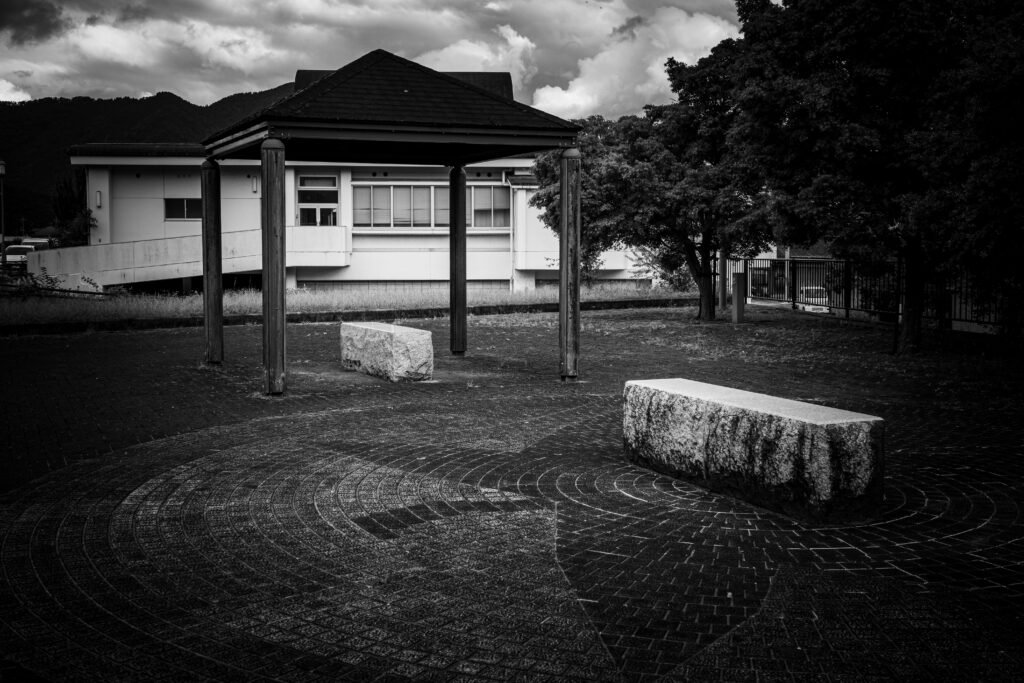
As anyone can see, it’s been a long time since they were active. The older ones have fallen into disrepair.
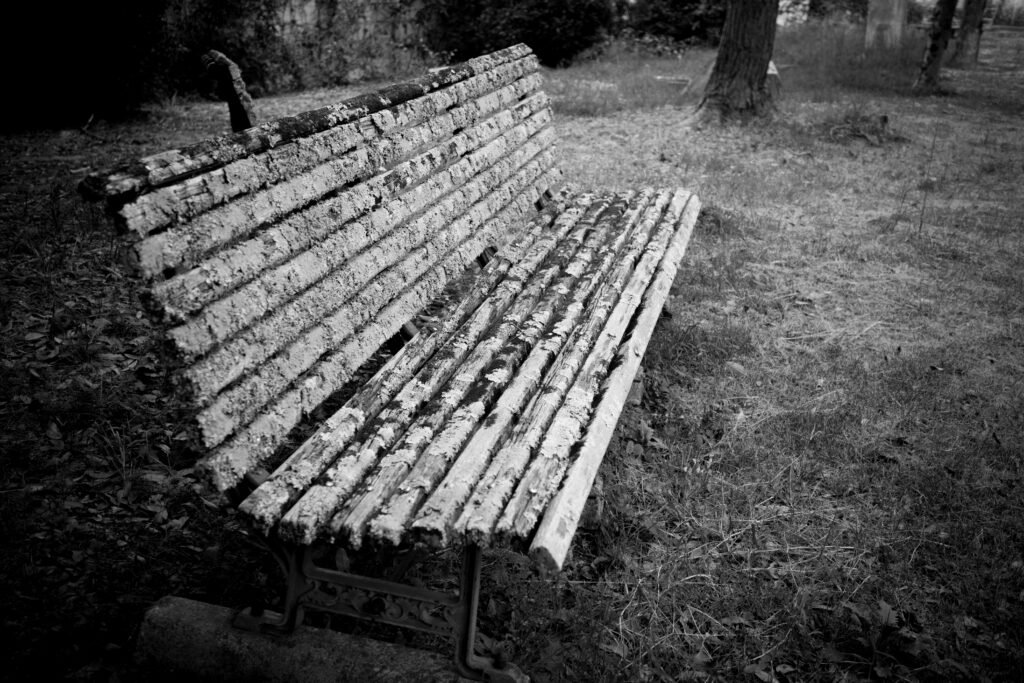
By contrast, the playgrounds in our village are beehives of activity, and there are a couple of coffee shops with indoor and outdoor seating that attract a fair number of people. But those are not public places where one arrives without the enticements of games or refreshments or background music, with no purpose except to sit and do nothing, or to randomly bump into other people.
I think the decline of these resting places is happening because doing nothing and randomly meeting other people in a physical place are no longer things we know how to do or value, and so we’ve stopped needing such places. We can’t even imagine needing them. Every time I hear someone talk about revitalizing one of these old spots, it’s in the context of creating some sort of planned activity or commerce to attract people: a pop-up market, a place for food trucks, a pickleball court. No one ever talks about simply fixing the park benches and lights and planting some flowers to create a welcoming space where things can just happen on their own. If you even suggested such a thing, you’d be met with blank stares. I doubt that the people who planned and built these resting spots years ago would recognize their world in ours, or themselves in their descendants.
Technology is largely to blame. Before social media, if you wanted to simply hang out with people and do nothing in particular, one way you could do that is get up and go to one of these places, where you knew you’d end up bumping into people. You might even arrange to meet someone there — though you wouldn’t have to. Now, most of our spontaneous social interactions occur digitally, often asynchronously. If you want to know what your friends are up to, often the first impulse is to check your social media feed. Once we all started doing that, our devices trained us to seek quick excitement (on the devices, of course), and after a while we lost the ability to do simple things in the analog world, like sit in a quiet park and read a book, or watch the clouds pass overhead, or look a stranger in the eye and strike up a conversation.
To be clear, I’m no Luddite or Marxist (though I will become a member of The Village Green Preservation Society if a branch ever opens in Japan). I thoroughly enjoy the benefits of technology. I’m able to make free video calls to friends and family all over the world and maintain my relationships with them; I have a network of old and new friends in Japan with whom I organize meetups through the Line app; I listen to streaming music; I do all kinds of research on the Internet; I’m taking a Japanese language course that’s entirely online; I post photos and interact with other photographers on Flickr. And, obviously, I’ve started a blog (though I made an intentional choice to use an old-school platform like a blog over algorithm-driven social media, which I absolutely stay away from). And it would be great to see more see more food trucks and a pickleball court or two in our village. Technology and commerce and games can and do bring people together. I’ve never been one to indulge in nostalgia (which Abbie Hoffman famously called “a form of depression both for a society and an individual.”). There are many, many ways in which the present is far better than the past.
It’s just that, with the passing of these old resting places, I fear we’re slowly losing something valuable without even noticing that we’re losing it. When it’s gone, we’ll sense that something’s missing, but we won’t be able to recall what it is.