“In going where you have to go, and doing what you have to do, and seeing what you have to see, you’ll dull and blunt the instrument you write with. But I would rather have it bent and dull and know I had to put it to the grindstone again and hammer it into shape and put a whetstone to it, and know that I had something to write about, than to have it bright and shining and nothing to say, or smooth and well-oiled in the closet, but unused.” –Ernest Hemingway
This week had to take my favorite pocket camera to Osaka for repairs. I did a dumb thing when riding my bike: I put the camera in what I thought was a secure pouch on the front carrier bag, to keep it within easy reach. Then I came to a place on the bike path where a tree root had grown under the pavement and lifted it, forming something like a speed bump, around which a line of weeds had grown, so I didn’t see it in time to slow down. My bike and I were jarred upwards, and out popped the camera. I heard it land with a dull slap on the pavement behind me . Although it was in a protective case, I knew this wasn’t good. When I retrieved it and turned it on, the screen presented me with an ominous message: “Lens Error.”
At the camera repair center, I handed it over to the technician, showing him the error message. He nodded like he’d seen it hundreds of times before, then asked me to wait, and took the camera to a back room. I thumbed through brochures of cameras I thought might be possible replacements, in the event mine was beyond repair, feeling like I was waiting for a relative to come out of surgery. About twenty minutes later the technician returned and explained what he’d found. Not surprisingly, the lens was broken by the impact of the fall. In addition, he pointed out — demonstrating with the camera in his hands — numerous dings, scratches and cracks that he said most likely occurred before my encounter with the camouflaged speed bump. I felt my heart sink, realizing all at once that I’d been much harder on my equipment than I was aware of, and that this was almost certainly sign that I’m much harder on others and myself than I should be.
The technician seemed to notice my distress. He gently assured me they could repair the lens and the other minor damage, and he gave me the price, wrapped in an apology. It was about a third of what it would cost to replace the camera with the latest, advanced model. I thought about it for a moment. The new model in the brochure was impressive. But with my now damaged camera I’d taken tens of thousands of photos in the space of three years, and so it felt like a friend. I gave the technician permission to proceed.
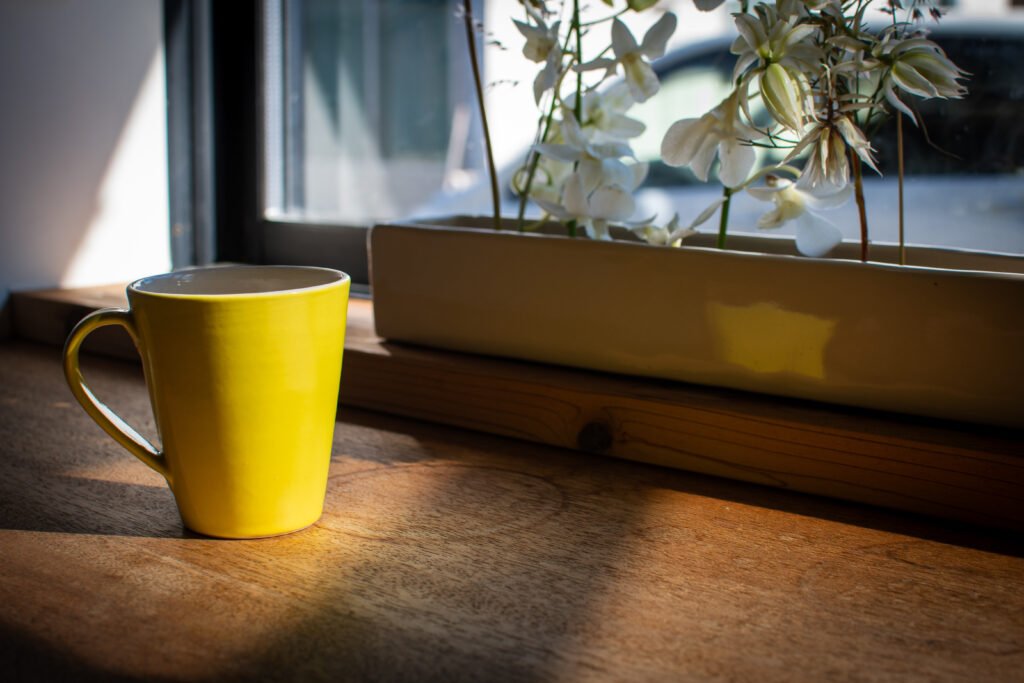
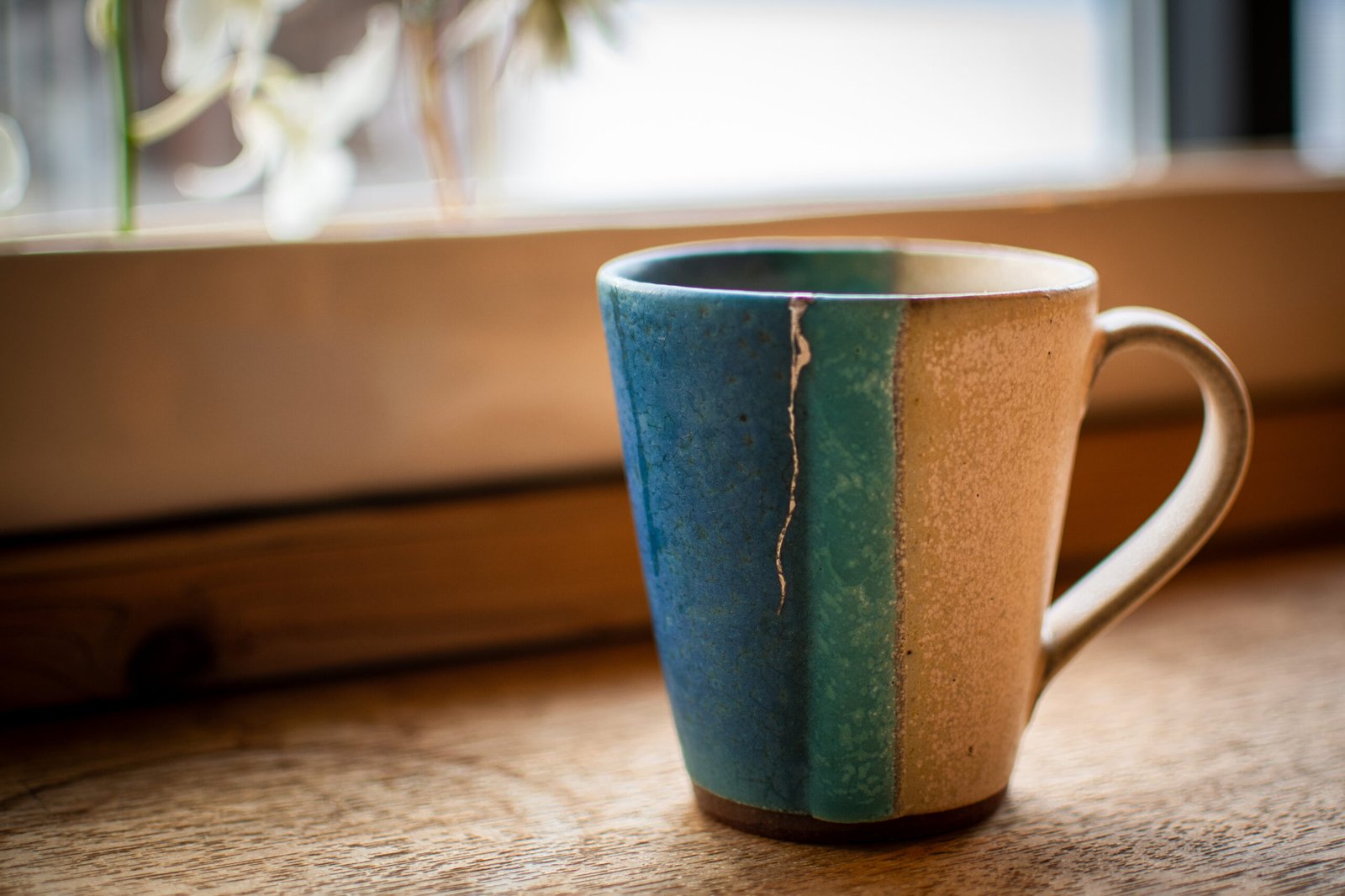
Years ago, on one of our visits to Japan, my wife and I stopped at a potter’s studio and bought two coffee mugs for ourselves, mine in shades of blue and tan, hers a glistening, canary yellow. They’ve lasted for years, but at one point mine developed a serious crack, and I thought it was finished. I was about to throw it out, but my wife stopped me, explaining that she could repair it in Japan through kintsugi, which is method of mending broken ceramics using a paste mixed with gold (that’s her handiwork on my mug in the featured photo). Many people consider a ceramic object restored by kintsugi to be more beautiful than the unbroken original. Rather than hiding the cracks, kintsugi emphasizes them, expressing the deep history of the object, and producing a unique form of beauty that combines fragility and strength.
Living well inevitably produces wear and tear. Everything and everyone we love will someday be broken. I’m learning that the best way to exert care for them is to treat them — and myself — as if they already are.