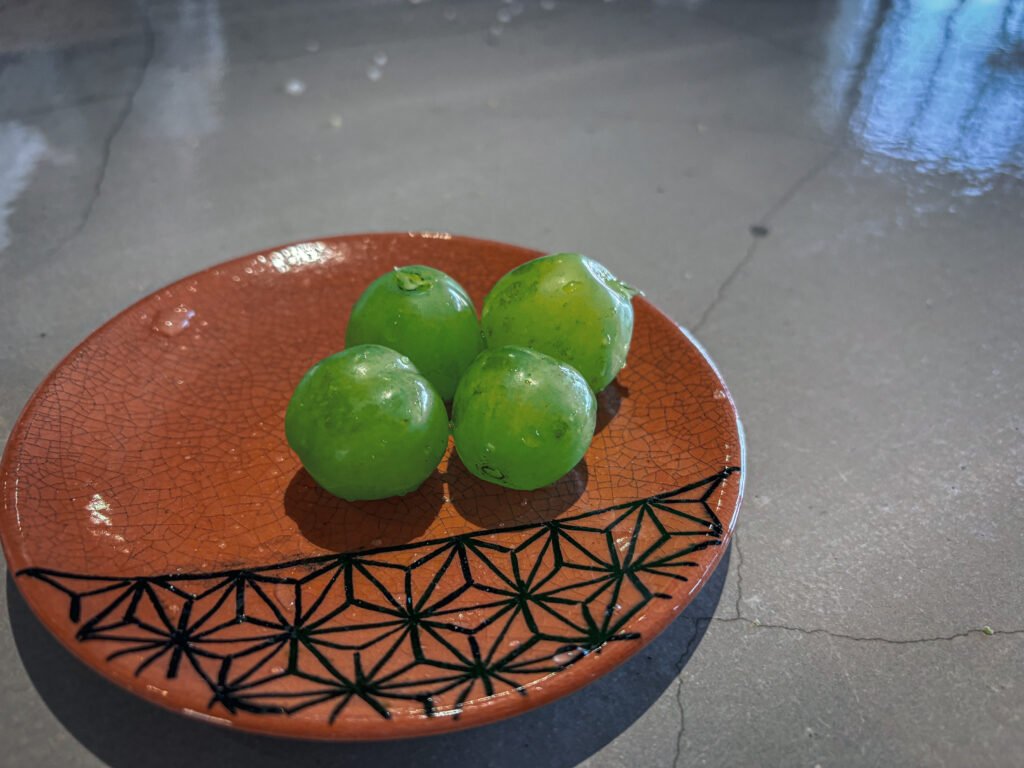
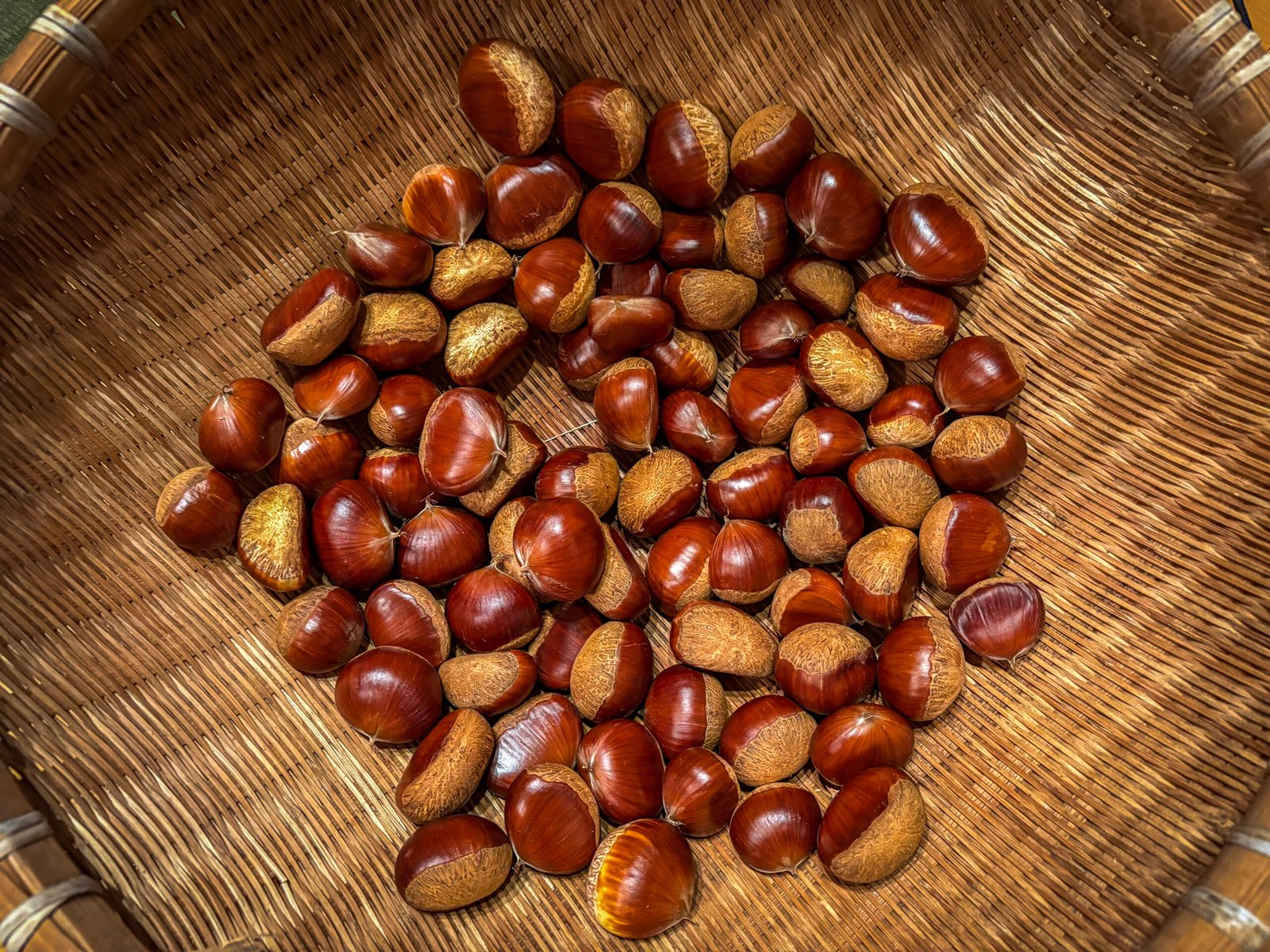
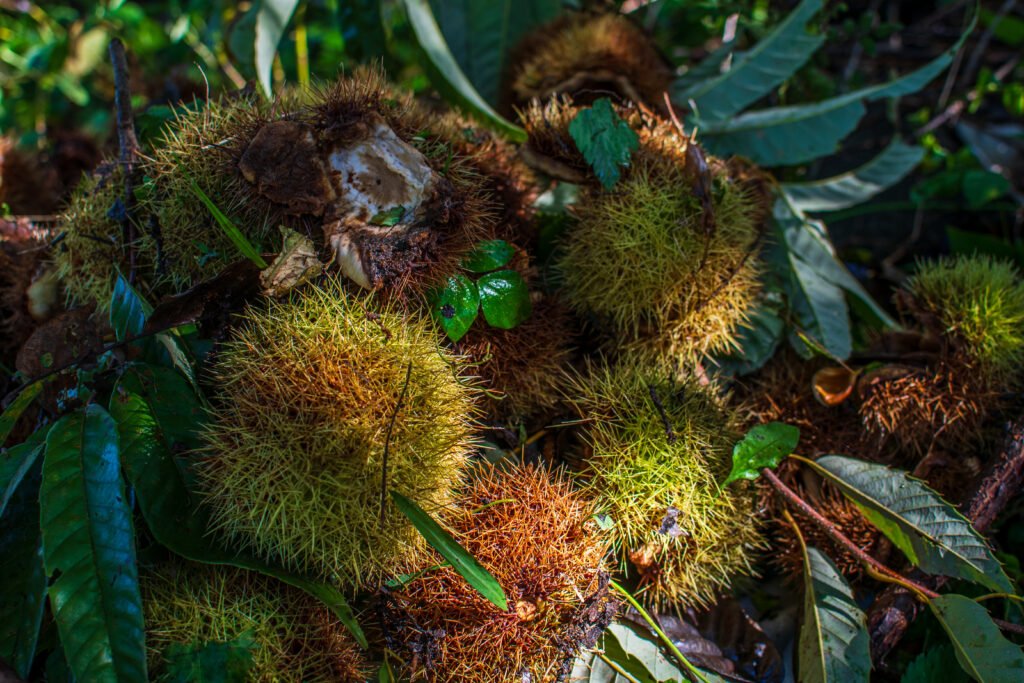
In our area of Hyogo Prefecture it’s now the harvest time for chestnuts and grapes. My wife and I are fortunate to have two chestnut trees in our yard. This year they’ve been especially productive, and the chestnuts are huge. Not only are we fortunate to have the trees, but we also have a close friend, Sato san, who is a professional fruit tree pruner (among her many other talents). The size and number of our chestnuts this harvest is largely due to her efforts over the whole year.
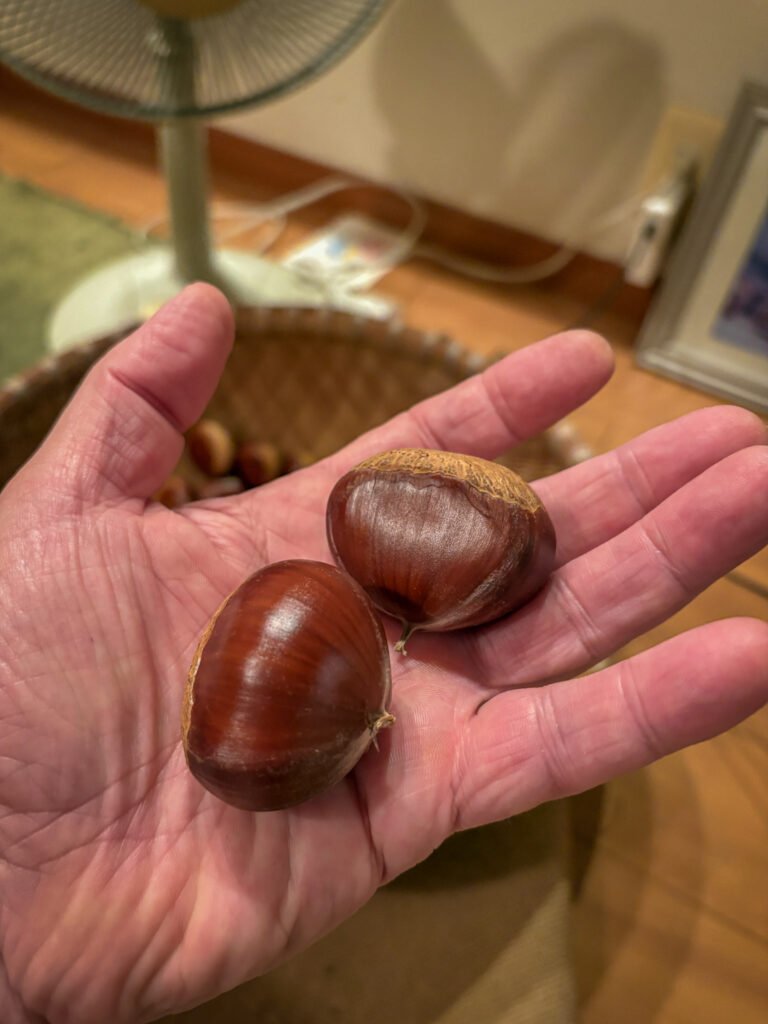
Unlike Sato san, we know nothing about growing chestnuts. Yesterday, seeing they were ripe, we plunged in and went about shaking the trees to dislodge the sharply-spiked shells containing the nuts. With some prodding and clipping, a number of these prickly little cannonballs came crashing through the trees, causing us to duck for cover. We gathered them, together with the ones that had fallen to the ground without our assistance, cracked the shells open with our feet and with our hands (protected with leather gloves), removed the little delicacies, rinsed them, tossed them in a big, flat wicker basket, then pointed a fan at them and left them to dry overnight.
Today we showed our daily harvest to Sato san, who was impressed. She thought we may have harvested a record-sized chestnut, and so she decided to weigh it.
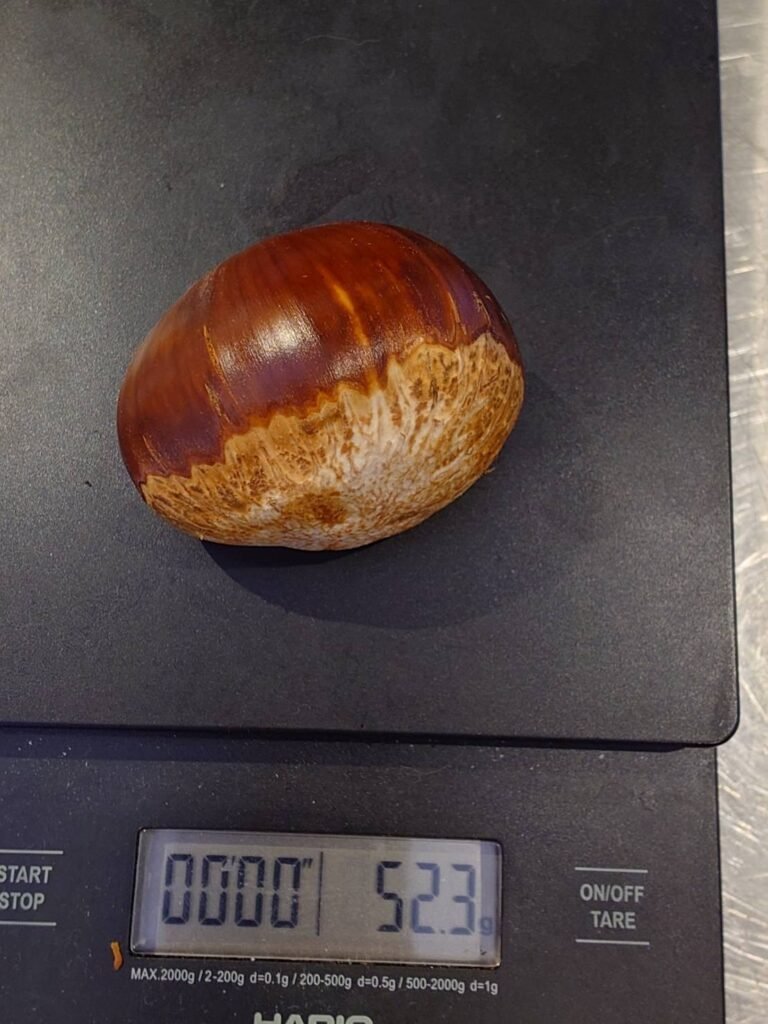
According to Sata san, this chestnut is three levels above the top level of the common scale that is used to compare the relative sizes of chestnuts. I couldn’t quite grasp that. If it is above the top level, and by definition there are no levels above the top level, then how can this chestnut be three levels above that? I tried to sort it out with her, but she just happily repeated: yes, this chestnut is three levels above the top level. I had the feeling she was teasing me with a Zen koan, like asking me what is the sound of one hand clapping, or whether a tree that falls in the woods makes a sound if there is no one there to hear it. But I recognized that, as usual, my limited Japanese language skills were probably the cause of my incomprehension, and nothing more profound than that.
As pleased as Sato san was with this enormous chestnut, she admonished us after we told her we had shaken the trees and had cut some of the branches near the shells. Let them fall on their own, she advised, otherwise you’ll hurt the trees. Now my wife and I have cleared the undergrowth so that we can easily spot the fallen shells and nuts in the dark shadows under the canopy of the traumatized trees. We hope they’ll forgive us.
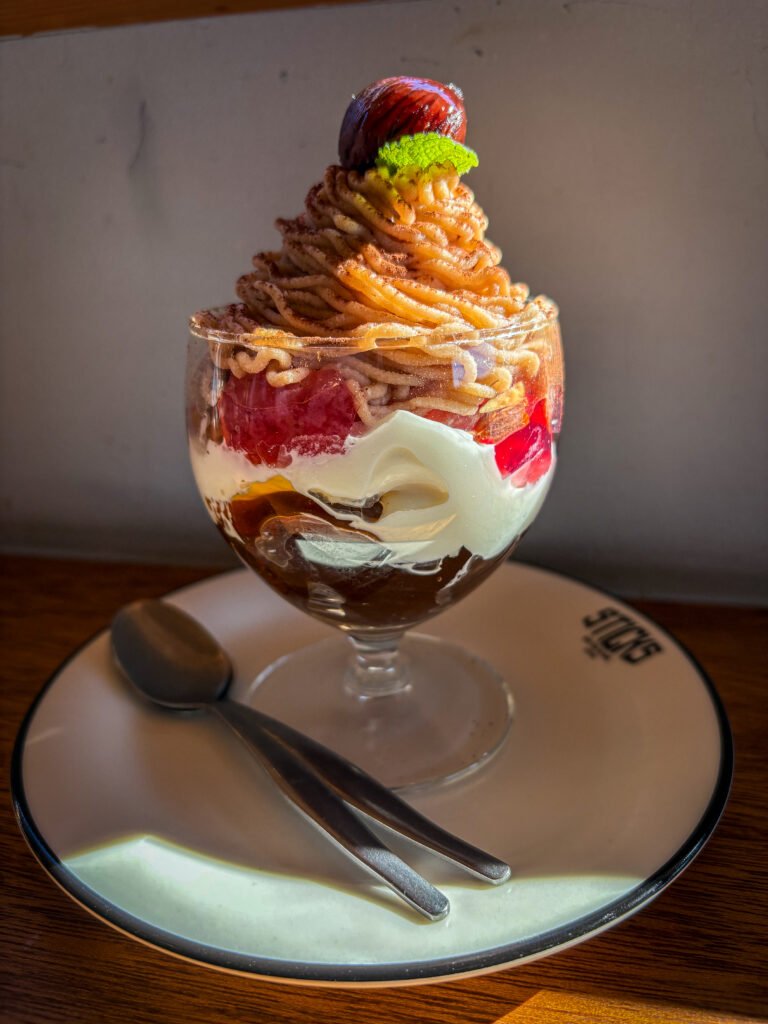
My favorite way to eat chestnuts is boiled, diced, and mixed in a bowl of rice, spiced with just salt and pepper. But of course there are a lot of people who think of them as dessert, especially in the form of a Mont Blanc. I’d never even heard of this treat before I came to Japan, but it’s very popular here, and is offered in many varied forms, with certain restaurants vying for the reputation of having the best Mont Blanc. This specimen is from one of our favorite places, Sticks Coffee.
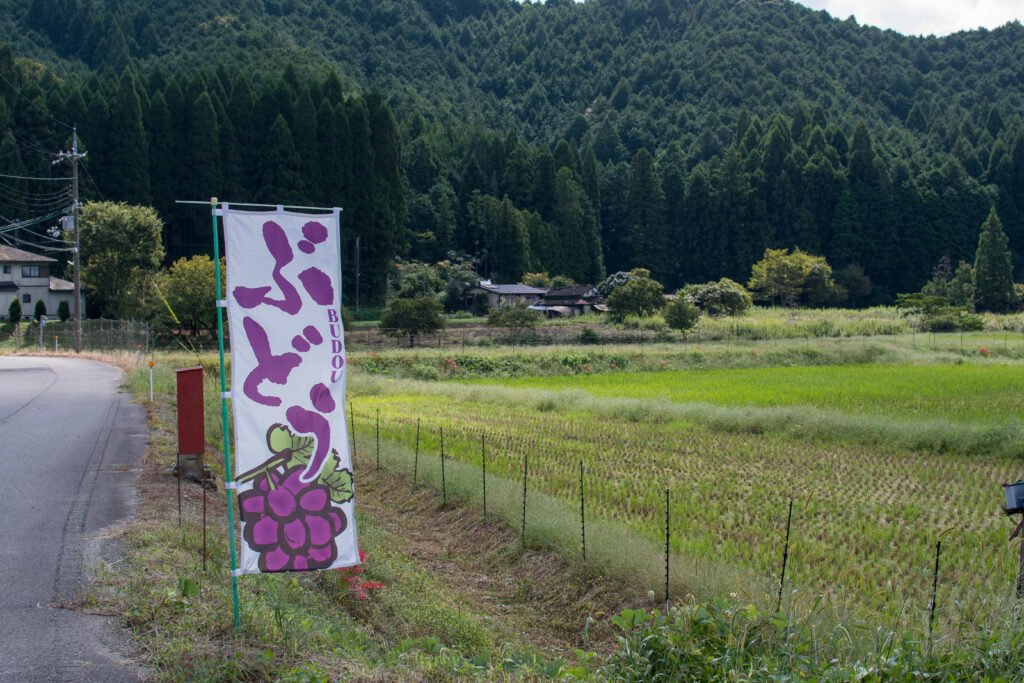
The yearly chestnut harvest in Tamba corresponds to the tail end of the grape harvest. Many grapes are produced here — for eating, not for drinking. Sato san also knows plenty about grapes, since she works part-time in a nearby vineyard. I visited her there this week, to take a few photos and to buy some of the last grapes of the season.
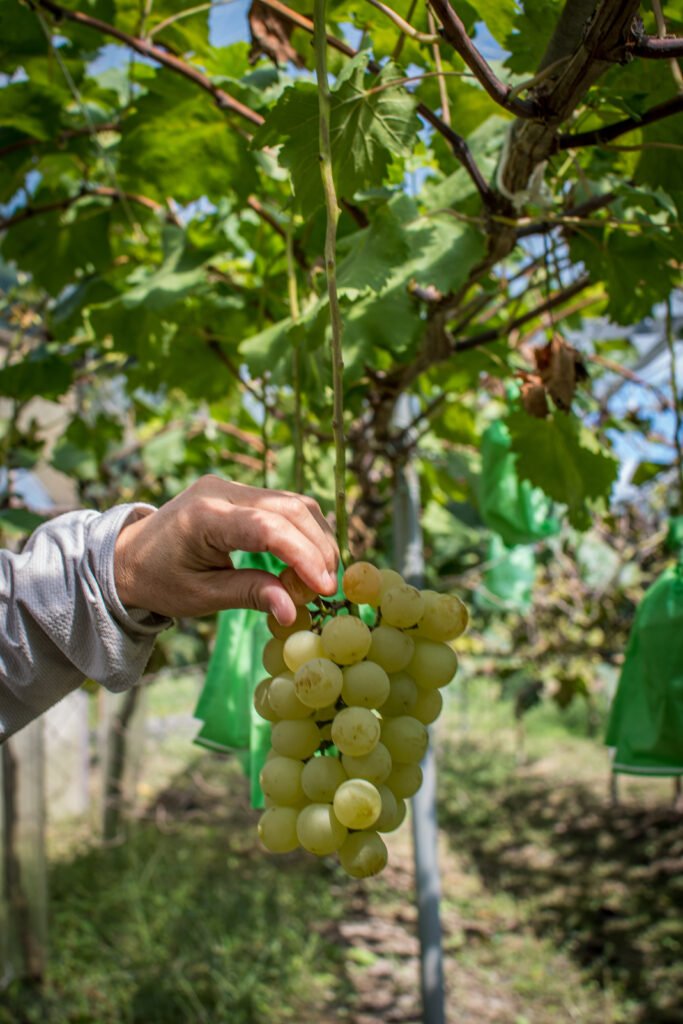
She explained that most of the grapes still on the vine at this time of year are for raisins. That’s Sato san’s hand in the photo below, culling some bad grapes from a bunch destined to become a box of raisins.
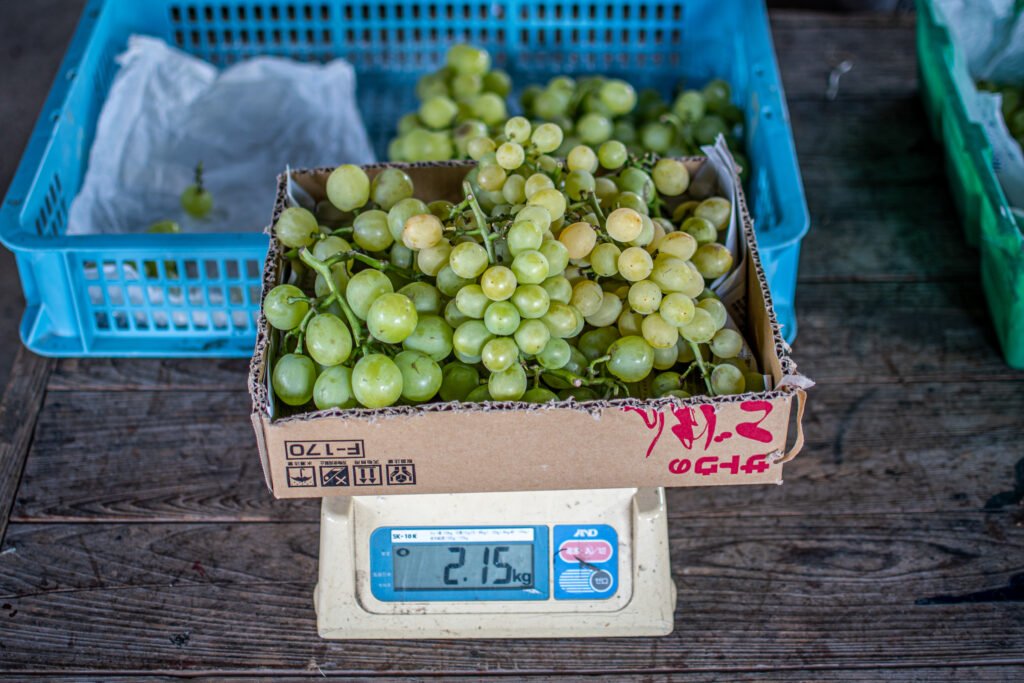
I bought about two kilograms of grapes, of two varieties. It cost me ¥4,600, which I was happy to pay because the vineyard employs two of my friends…and because the owner has five children and I feel obliged to support any effort to repopulate the Japanese countryside, given that my wife and I are not directly participating in that effort, aside from having moved here…
And because the grapes are really good.
I bought so many grapes that I had to give some away. Apparently, other people in my neighborhood are in the same situation. I went to a local coffee shop later (a great place called Ajun Coffee & Yums) and a customer came in with a bag of grapes and handed them to the owner. She placed four each on beautiful, matching plates, and served them to all the other customers.