
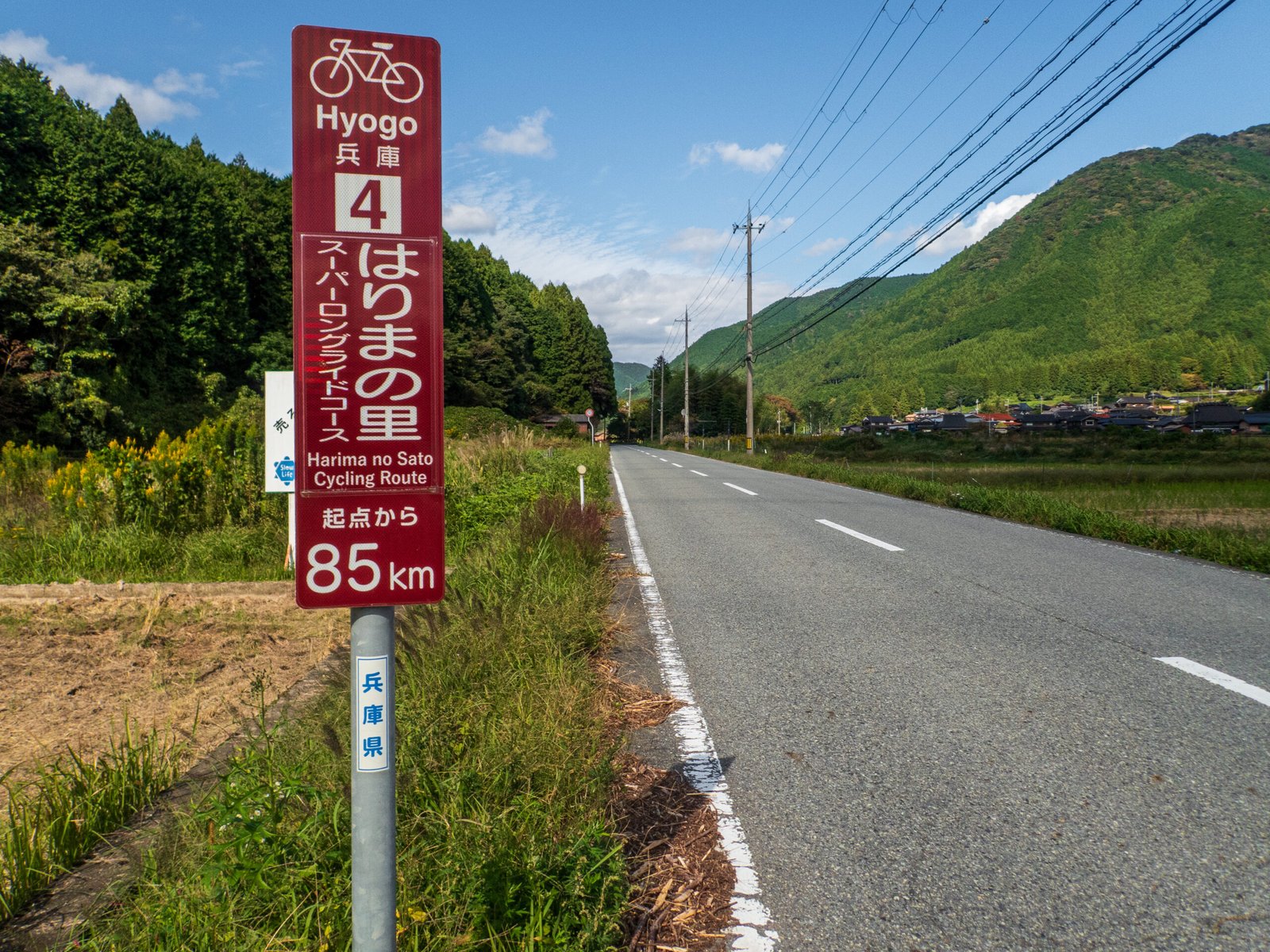
I recently had the good fortune to meet a new friend, Kevin, who bicycles in the same, eccentric manner as I do: on a folding bike, hopping on and off at train stations and taking extended, leisurely tours of the station towns and surrounding countryside. We arranged to meet last Sunday at a train station nearly thirty kilometers south of my home. I’d bicycle there and he’d come by train from his home in Kobe. From the station we’d begin a long loop that would include several valleys and mountain passes and tunnels, ending for me in my hometown, and for Kevin at a train station on the same line he came in on. He knew our route well, and I was looking forward to what would be my first long ride with a like-minded cyclist.
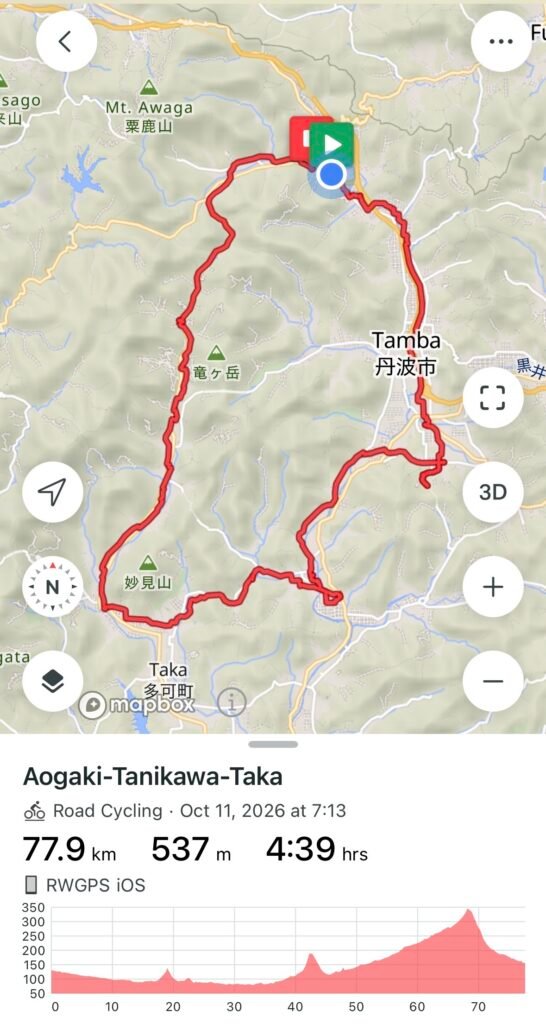
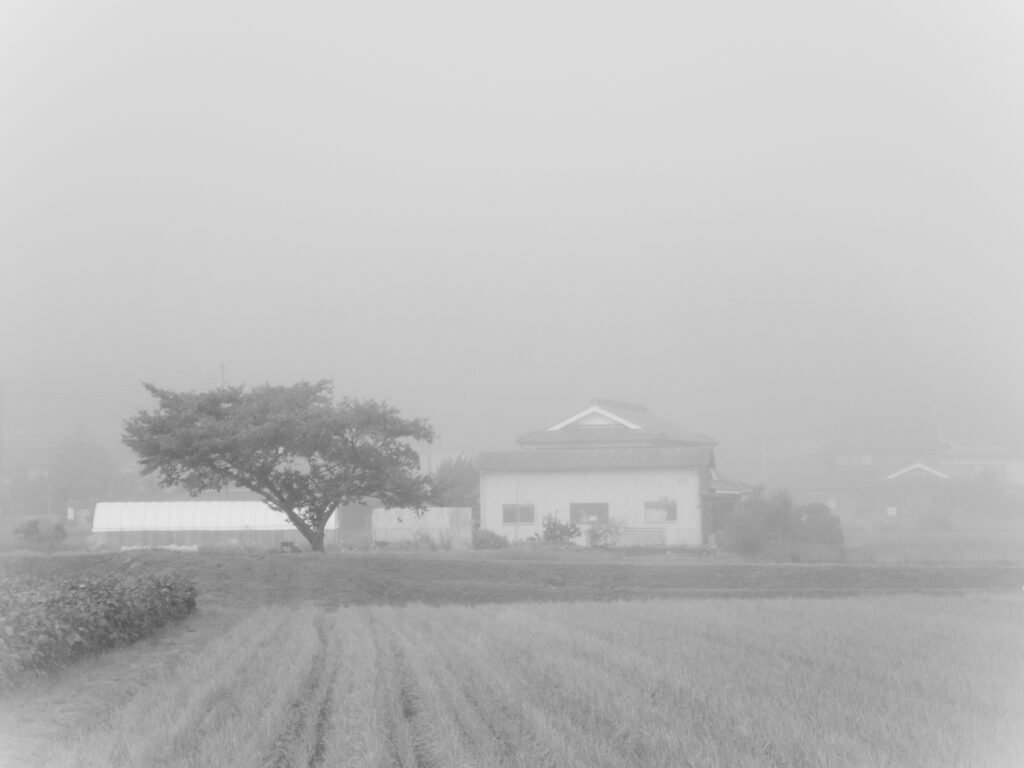
I started out early in the morning, alone, with mist still hanging on the mountains, on a familiar route along my local river. The way to our meeting point snaked further south than I had ever ridden before. At the very place the route became new to me, the mist on the mountains descended and formed a thick fog, blocking out the sun and reducing visibility to only nearby trees and buildings and the path in front of me.

I had a navigation app running on my phone, which I always keep mounted on the handlebars, and I checked it frequently to make sure I was heading in the right direction, while I enjoyed the phenomenal scenery that the fog was creating.
The navigation led me to a narrow road that began to ascend up a mountain — which was not a feature of the route I that recalled seeing when I reviewed the map the night before. A very short distance up this road I came to a plateau, where there was a pond or a reservoir of some sort. I stopped for a rest and I was greeted with a remarkable scene.

A small shrine had been placed onto a man-made outcropping on the pond. As I stood and watched, the sun broke through the fog and shone down on the shrine, and sunbeams danced on the mist that rose from the pond and slowly drifted across its surface in the morning breeze. A nearby monument, carved in stone, proclaimed that this was the shrine to the god of the mountain.
I admired the scene for a minute or so, and then, not wanting to be late, continued on the path up the mountain. It quickly became steep, and narrow, and littered with debris from recent rains — and impossible for cycling. Despite what my navigation app was telling me to do, it seemed the god of the mountain would not allow me to continue.
I stopped and double-checked my location on another navigation app, and saw that I’d been way off track. Using the alternative app, I found a route to the station where I was due to meet Kevin, which also showed I would be twenty minutes late, at best. I messaged Kevin, who was still on the train, and we arranged to meet at a convenience store that was along our route, and at which I could potentially arrive at about the same time as he, if I hurried.
So off I went, back down the mountain. I passed the pond and shrine, but the mist had cleared, and though it was still beautiful, it was no longer anything like the incredible scene I had witnessed just minutes before.
As I hurried to meet Kevin, I thought about what it’s like to get lost and then to find your way again. It occurred to me that there are at least two kinds of being lost. The first is when you know you don’t know where you are, so you try to sort it out somehow, with maps, or an app, or landmarks, or whatever. The second, deeper way of being lost is when you think you know where you are, but you’re wrong, and you forge ahead, and then some inescapable piece of evidence presents itself (e.g., mountain god) revealing that your blissful certitude has led you off the mark, and you feel a shock that’s more disorienting than the first way of being lost. It’s like being lost on top of being lost. I was lost in that second way.
When I finally met up with Kevin at the convenience store, we had coffee and I showed him where I went wrong on the map. “That road does not exist!” he said, laughing. He told me that he and another cyclist we know had once been led to it by a navigation app, as I had. They’d even started to carry their bikes up the decrepid path before realizing the road was not a road. I felt a little better after hearing that.
For the rest of the day we cycled through the most beautiful Japanese countryside imaginable, in perfect weather. Kevin led, and though neither of us was always sure exactly where we were or which road we should take, we found our way. We passed through many villages in which people were celebrating at festivals to give thanks for the harvest. Groups of villagers dressed in colorful attire guided small floats towards their local shrines, which were decorated with banners. Every time we passed people on the streets assembled for these mini parades they happily greeted us, sometimes shouting “Hello!” in English.

That’s Kevin on the bike ahead of me as we approached a group of villagers pushing a float.
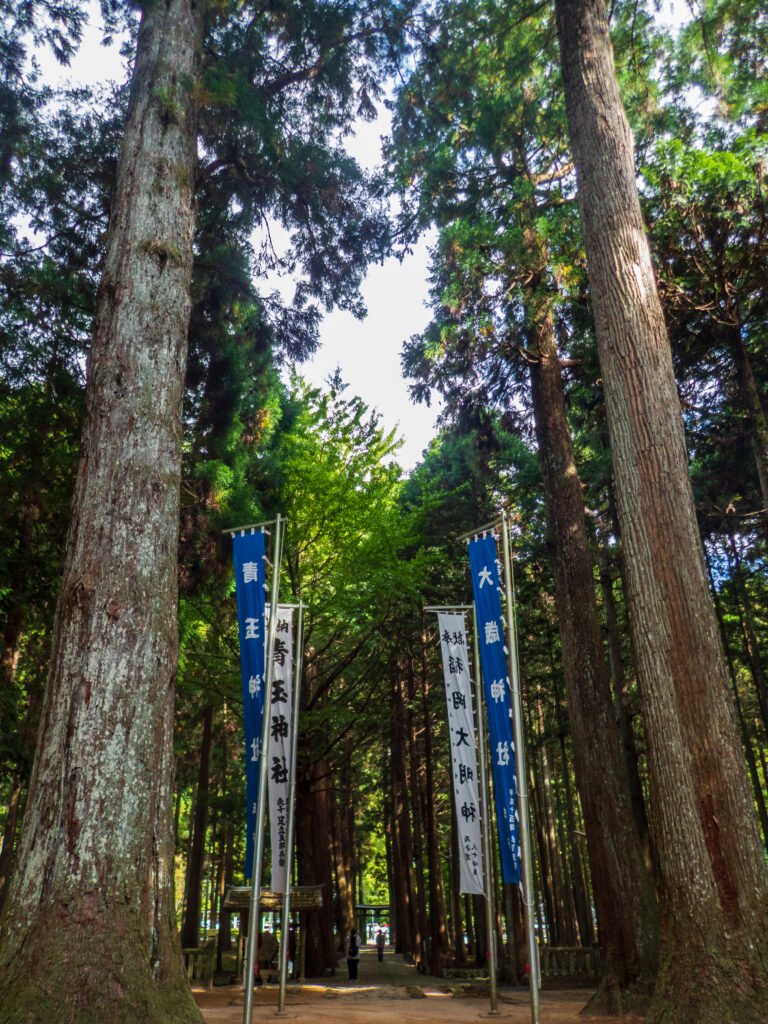
Nearing the end our long loop, closer to my home, the places naturally became familiar again. I pointed out the house of a friend on a distant side of a mountain, and a small crafts museum that I like a lot, and a roadside stop where, as I told Kevin, people had taken shelter in a terrible snowstorm last winter. We paused to visit a beautiful shrine I’ve been to a few times that’s surrounded by enormous, thousand year-old Sugi trees.
Once we reached my hometown, I led Kevin on a scenic back route to the beginning of the path that runs alongside the river, from which point he knew the way to the train station. We shook hands and thanked one another for a good ride.
I plan to take many more rides this fall before the cold weather hits. I don’t think I can avoid getting lost on some of them, in either the first way or the second way, and I don’t think I want to. When I get lost, I tend to find things. When I get lost with others, I tend to find even more.