Impermanent Resident

  • Places No One Goes To Anymore

    Places No One Goes To Anymore

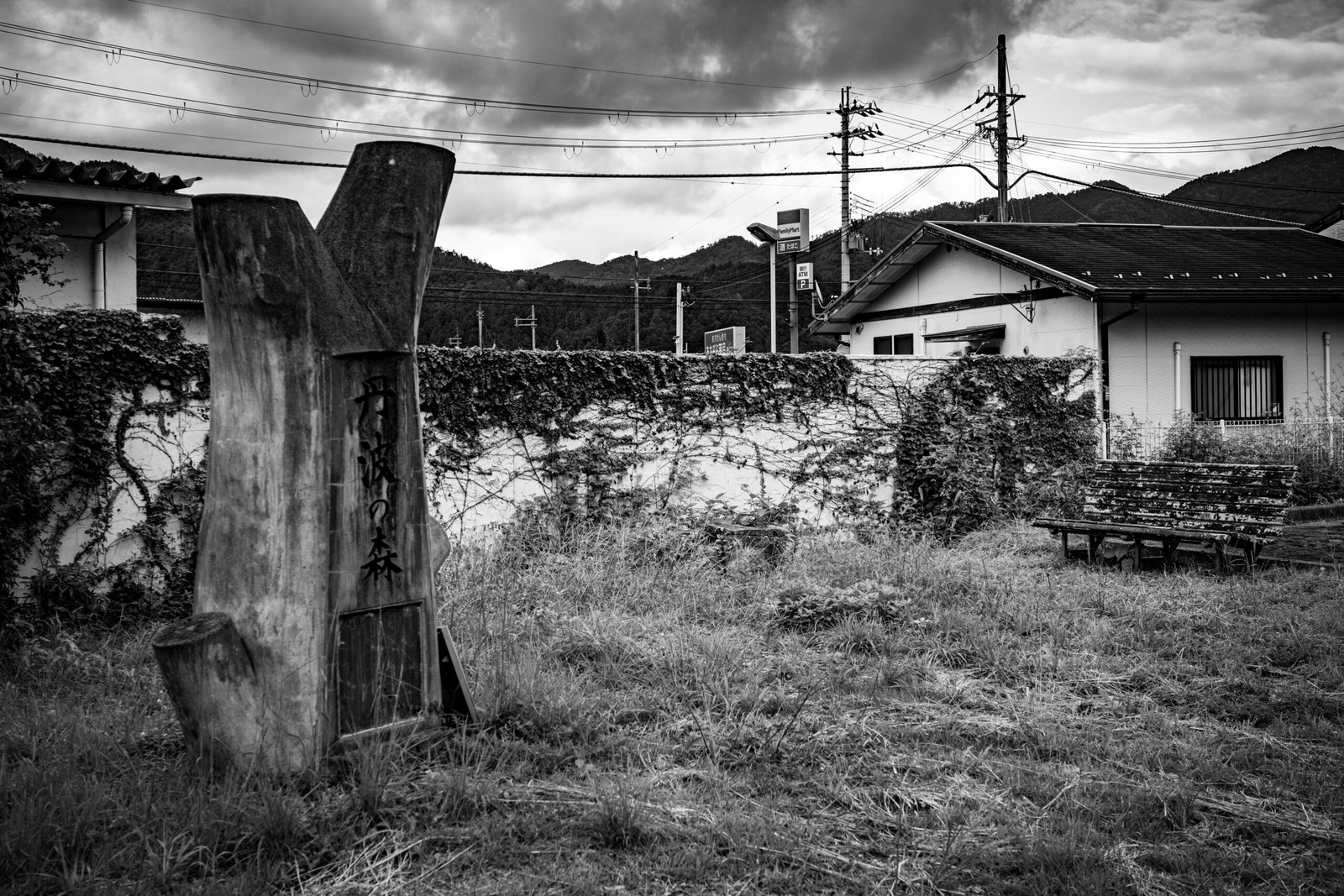
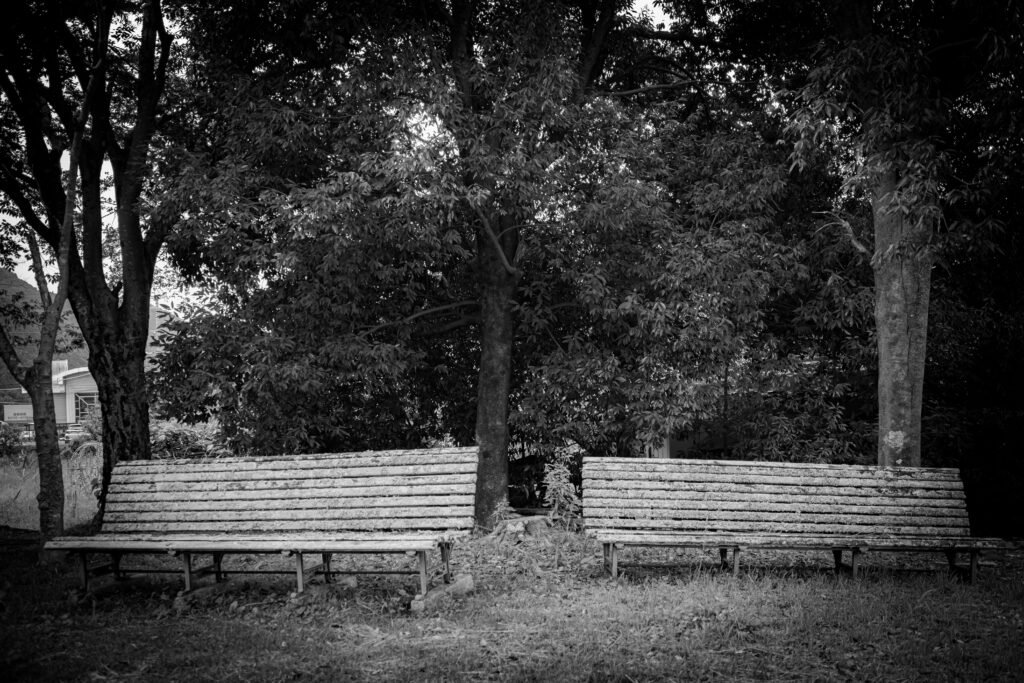
    A long time ago, people in my village created resting places with little benches where anyone could just stop and sit.
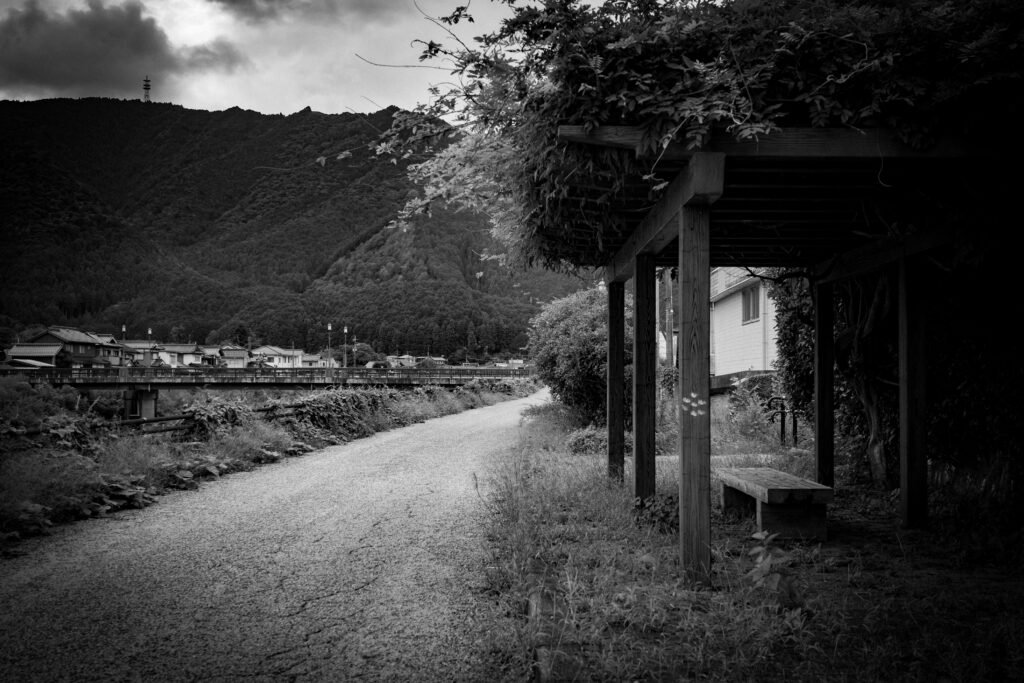
    I’ve never seen a person sitting in them, although I myself am a regular at this one:
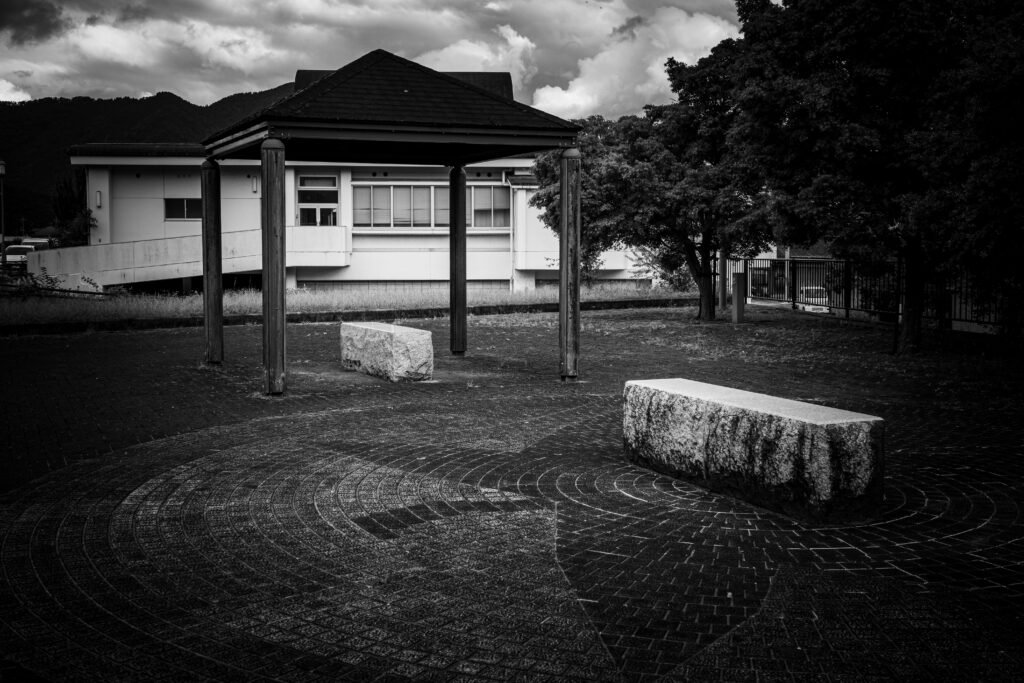
    I go there because it’s a good place to surreptitiously consume packaged snacks and beverages, which I sometimes crave and buy at a nearby Lawson convenience store. I never expect to see anyone else at this resting place (which of course is why I go), though school children on bicycles sometimes pass by and politely greet me, no doubt wondering what I’m doing in a place where no one ever goes. What I’m usually doing, aside from eating, is worrying that my wife is about to track me down using my phone’s location sharing and find me munching on a microwaved hot dog, or something equally delicious and evil.

    Today, while I was sitting there enjoying sweet buns filled with red bean paste and a can of coffee, I thought about why no one goes to these kinds of places anymore.

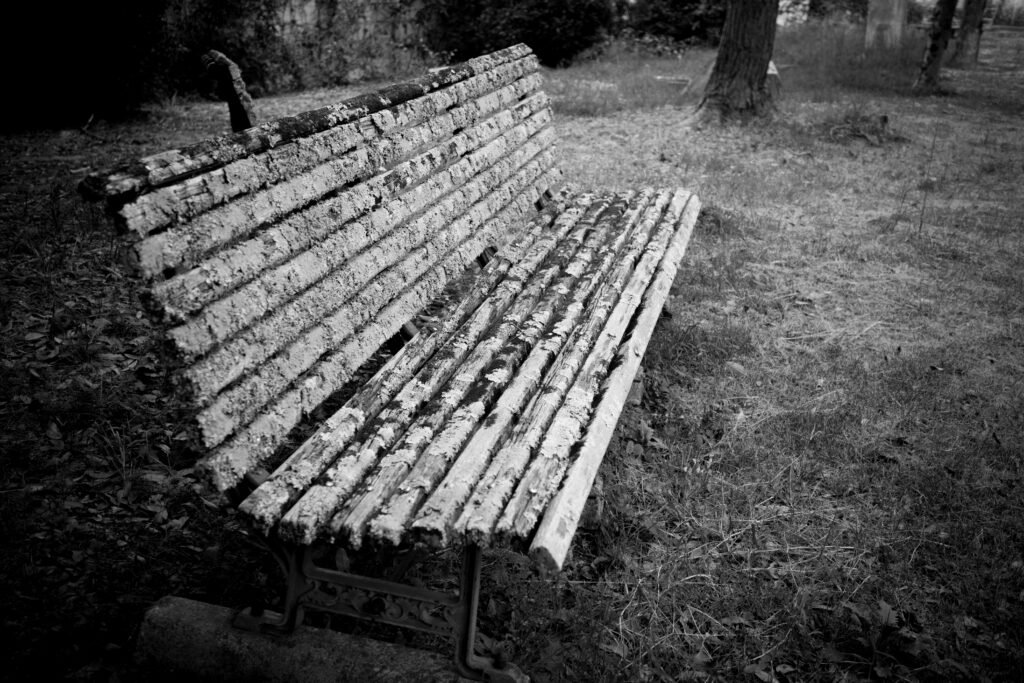
    As anyone can see, it’s been a long time since they were active. The older ones have fallen into disrepair.
    By contrast, the playgrounds in our village are beehives of activity, and there are a couple of coffee shops with indoor and outdoor seating that attract a fair number of people. But those are not public places where one arrives without the enticements of games or refreshments or background music, with no purpose except to sit and do nothing, or to randomly bump into other people.

    I think the decline of these resting places is happening because doing nothing and randomly meeting other people in a physical place are no longer things we know how to do or value, and so we’ve stopped needing such places. We can’t even imagine needing them. Every time I hear someone talk about revitalizing one of these old spots, it’s in the context of creating some sort of planned activity or commerce to attract people: a pop-up market, a place for food trucks, a pickleball court. No one ever talks about simply fixing the park benches and lights and planting some flowers to create a welcoming space where things can just happen on their own. If you even suggested such a thing, you’d be met with blank stares. I doubt that the people who planned and built these resting spots years ago would recognize their world in ours, or themselves in their descendants.

    Technology is largely to blame. Before social media, if you wanted to simply hang out with people and do nothing in particular, one way you could do that is get up and go to one of these places, where you knew you’d end up bumping into people. You might even arrange to meet someone there — though you wouldn’t have to. Now, most of our spontaneous social interactions occur digitally, often asynchronously. If you want to know what your friends are up to, often the first impulse is to check your social media feed. Once we all started doing that, our devices trained us to seek quick excitement (on the devices, of course), and after a while we lost the ability to do simple things in the analog world, like sit in a quiet park and read a book, or watch the clouds pass overhead, or look a stranger in the eye and strike up a conversation.

    To be clear, I’m no Luddite or Marxist (though I will become a member of The Village Green Preservation Society if a branch ever opens in Japan). I thoroughly enjoy the benefits of technology. I’m able to make free video calls to friends and family all over the world and maintain my relationships with them; I have a network of old and new friends in Japan with whom I organize meetups through the Line app; I listen to streaming music; I do all kinds of research on the Internet; I’m taking a Japanese language course that’s entirely online; I post photos and interact with other photographers on Flickr. And, obviously, I’ve started a blog (though I made an intentional choice to use an old-school platform like a blog over algorithm-driven social media, which I absolutely stay away from). And it would be great to see more see more food trucks and a pickleball court or two in our village. Technology and commerce and games can and do bring people together. I’ve never been one to indulge in nostalgia (which Abbie Hoffman famously called “a form of depression both for a society and an individual.”). There are many, many ways in which the present is far better than the past.

    It’s just that, with the passing of these old resting places, I fear we’re slowly losing something valuable without even noticing that we’re losing it. When it’s gone, we’ll sense that something’s missing, but we won’t be able to recall what it is.
    ***

  • Wheels

    Wheels

    One of the things I love most about Japan is the variety of vehicles you see on the roads. Among the four-wheeled, motorized kind, I’m especially fond of the kei car, which is a type of mini car required to conform to government limits on size, weight, engine displacement, and horsepower. The kei car was introduced after WWII to encourage consumers to buy cars, and to thereby boost the Japanese auto industry and the overall economy. I’d say it worked.

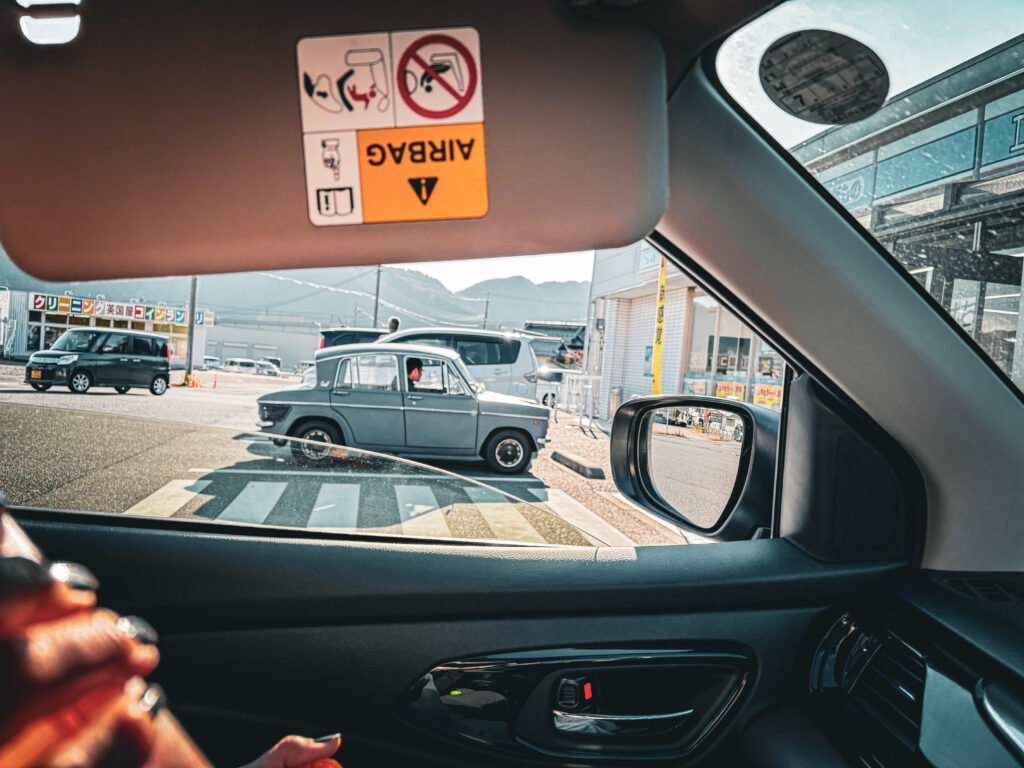
    This is an early 1960’s Matsuda (Mazda) model, the Carol.

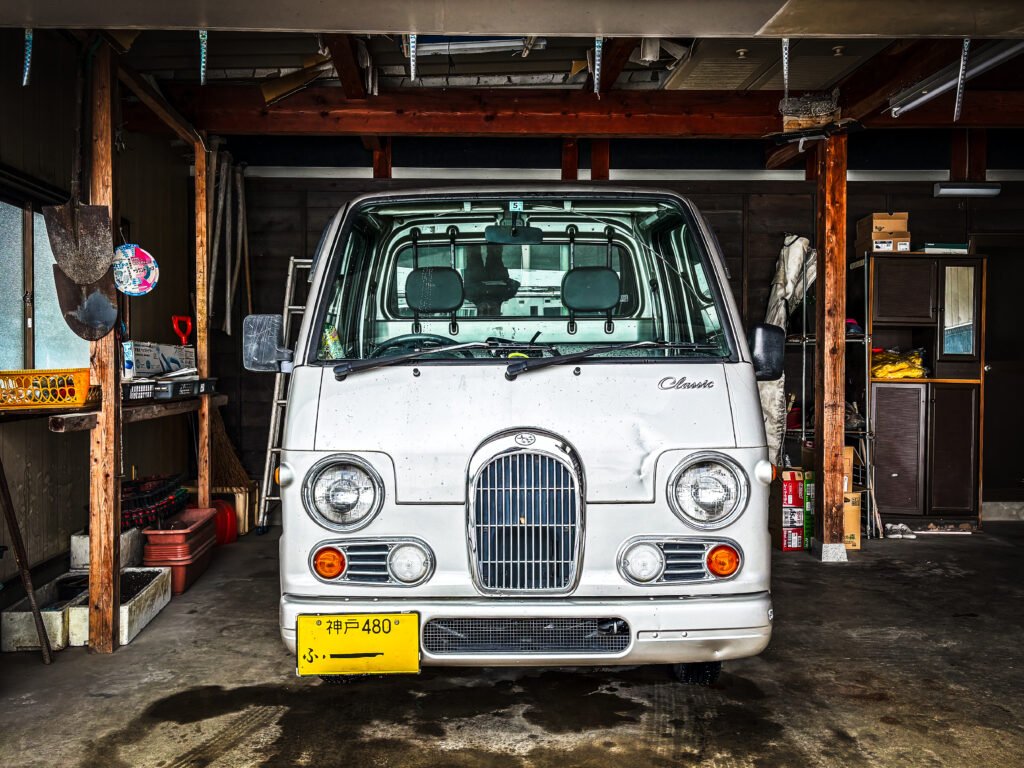
    And this is a Subaru Sambar cabover (flatbed) truck, from the same era.

    Since the early days of the kei car, Japanese automobile makers have been challenged to develop quality vehicles within the government-imposed constraints, continuously improving them in a highly competitive market. Today, many Kei cars are loaded with features that make them extremely convenient, safe (considering their small size), and fun to drive. What’s more, they’re cheap to buy and maintain, are fuel efficient, receive discounted insurance rates and road tolls, and are exempt from stringent parking rules. No wonder that roughly 40% of new cars sold in Japan are kei cars.

    I really want one — perhaps too much. I’ve been known to embarrass my wife by lurking in parking lots and inspecting people’s kei cars, sometimes making her take a photo of me with one of the models I’m considering. “Look at that poor woman, married to a weird foreigner with a car fetish!” Fortunately, she’s good humored about it.

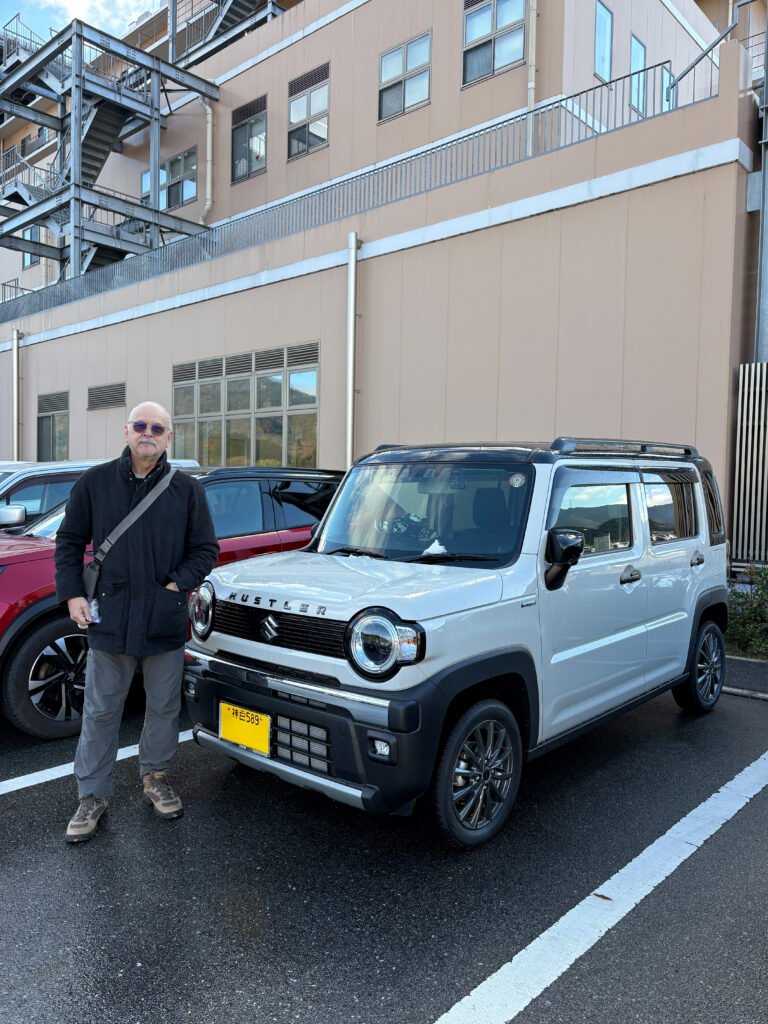
    Photo by Junko Toshima

    That’s me with a total stranger’s Suzuki Hustler, specifically the “Tough Wild” trim (what a name!) with four-wheel drive, roof rails, and waterproof interior fabrics. It’s like a baby Hummer, except it’s fuel efficient (20.5 km/l, or 47 US mpg) and cheap (about the equivalent of US$ 15,000 brand new). It comes with a little “Tough Wild” emblem affixed to the rear hatch door, which to me is like branding the butt of a koala bear with a skull and crossbones: ridiculous and sad, but it doesn’t destroy the appeal of the thing it’s attached to, even while making you feel sorry for it.

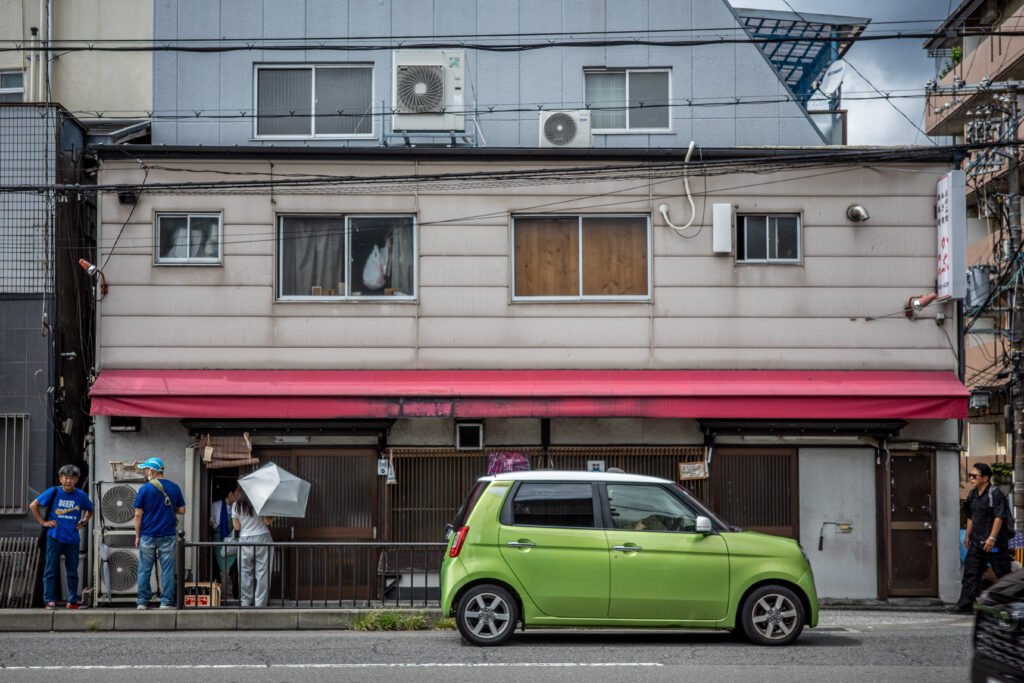
    The other car I’m considering is a version of the little green machine pictured above — the Honda N One. If Ikea made a car that you could bring home in boxes and assemble with an Allen wrench, this is what it would look like. I love its intentional retro-minimalist design. It’s not a “crossover” from another category of car (unlike the Hustler), nor is it trying to cater to a demographic or impress anyone. It’s emphatically just a car. Twenty years from now it will still look good, and will likely still be running. There’s an outstanding EV version available, and I’ve got my eye on that, in plain white. With generous government incentives for EVs it’s about the same price as a Hustler.

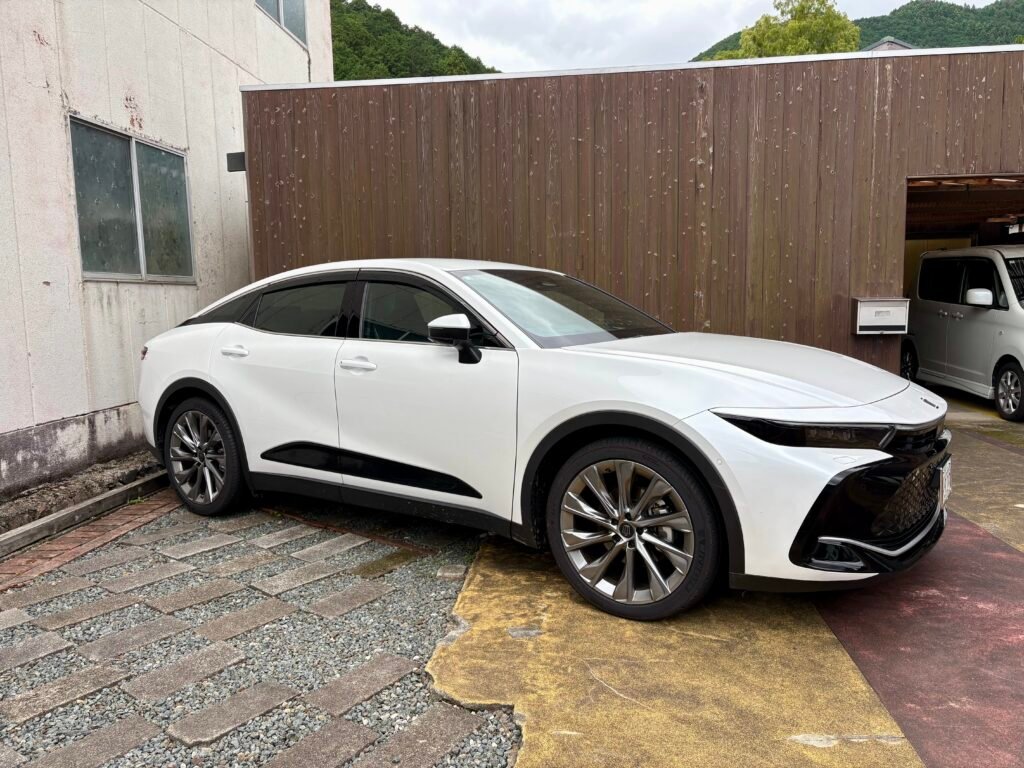
    I confess to feeling a little guilty for thinking about cars so much. My wife and I already own a car: a big, new, luxury sedan that’s super comfortable cruising on highways and is also surprisingly fuel-efficient. Because we’re retired, neither of us has to drive anywhere regularly, so sharing a car would seem to be the sensible thing to do. The problem is that she chose the car (which is fine; we’d always said we’d eventually each have our own car) and I’ve found that it doesn’t suit me at all, to say the least.

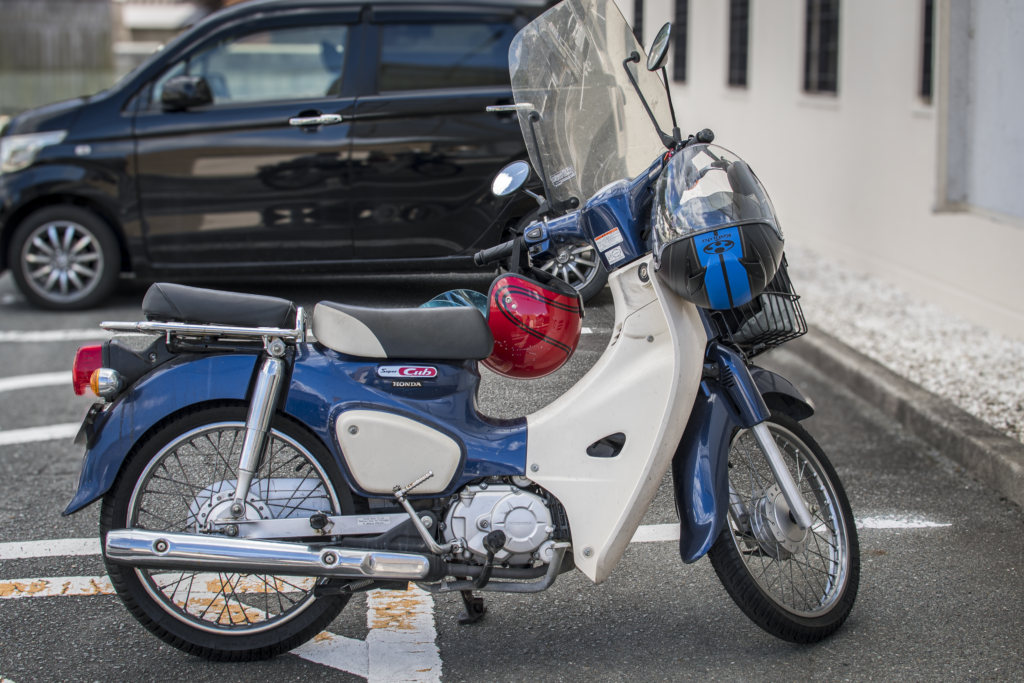
    Yes, gliding along the expressway in a living room on wheels can be enjoyable, but I long to explore the winding back roads in something more nimble and exciting. Mind you, before coming to Japan I imagined getting myself one of these:

    That’s the world’s all-time best selling model of motorcycle, the Honda SuperCub. It’s a truly impressive little machine. I wanted a Cub so badly that I went through the trouble of getting my motorcycle license in the US just before I moved to Japan. Unfortunately, near the end of the post-license advanced training I made a beginner’s mistake on the course and took a spill, sustaining a broken rib, broken wrist, and a concussion. This was while doing only twenty miles per hour and wearing a helmet — under supervision. After that incident, I don’t know if I’ll ever buy a SuperCub. I’ve had to admit that, despite being in great shape for my age, at sixty-seven I may no longer have the eyesight, reflexes, and balance needed to ride safely — not even on a light motorcycle on Japan’s ultra-safe roads. Maybe I’m not there yet, but I will be, probably sooner than I’ll recognize. Still, every time I encounter a SuperCub my heart sinks. I think about them even more than I think about kei cars.

    Why does being wise so often feel like crap?

    But that’s alright. I’m saving up for my kei car, and I’ve started using an alternative form of two-wheeled transportation to explore those back roads.

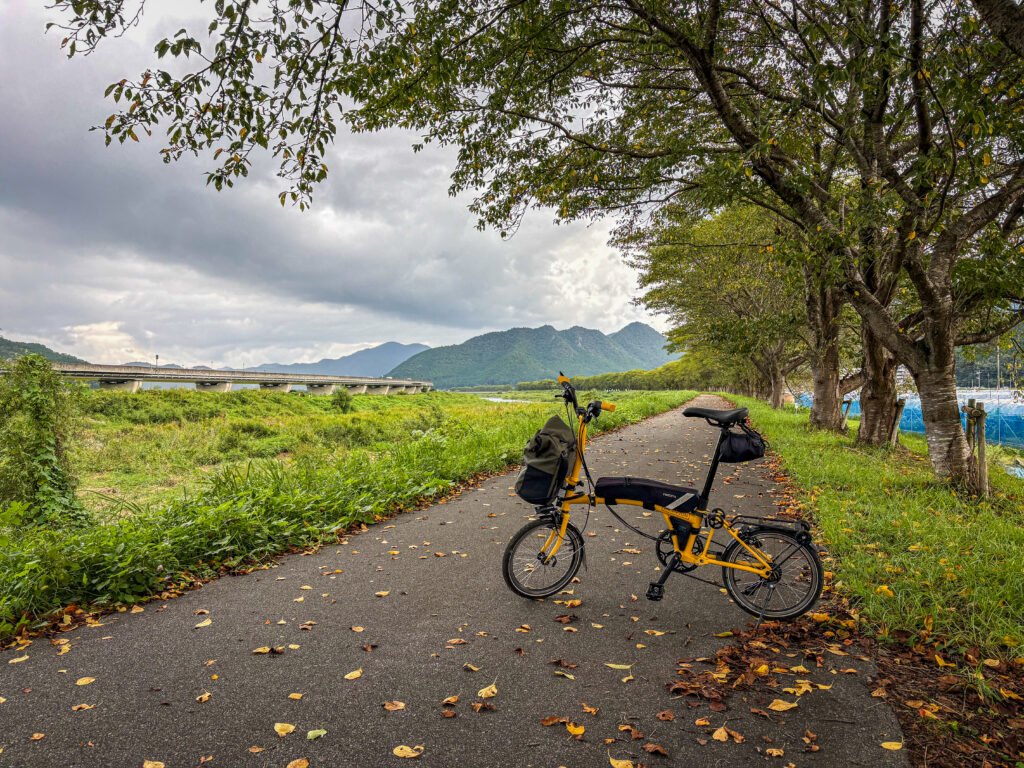
    It’s a Brompton C-Line twelve-speed folding bicycle, which I’ve named “The Bumblebeast,” for its bright yellow and black colors and sturdy steel frame. Once folded, I can slip it into a “Rinko” bag and bring it with me on a train or bus, or throw it in the back of my future kei car, and thus have access to more places in Japan than I ever could via any other single means of transportation. Plus I get good exercise. To illustrate how splendid it is to own one of these things: Today my wife and her friend invited me, on the spur of the moment, to join them for lunch in a neighboring town thirteen kilometers away. They were about to leave, and I noted that the weather was perfect for a ride, so I quickly folded The Bumblebeast and put it in the car trunk (someday I’ll write about why people carry so many umbrellas in their trunks), and off we went. After lunch I retrieved the bike, unfolded it, and rode home on the path along the river, where I stopped to take this photo.

    Ain’t that tough and wild? SuperCub owners, eat your hearts out.

    ***

  • Tourists in Osaka

    Tourists in Osaka

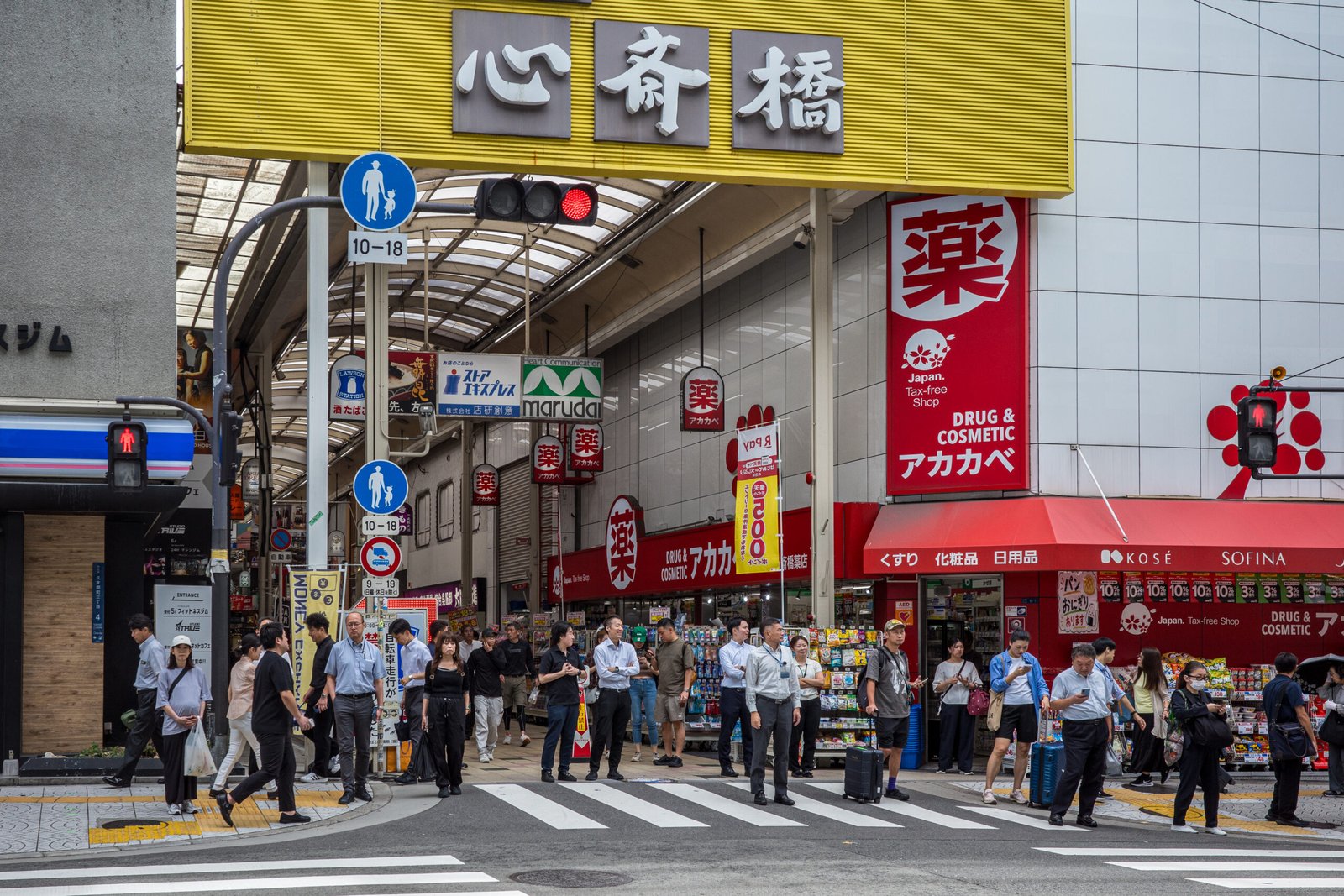
    I took an unplanned trip to Osaka today. My wife was going there with two of her friends and I decided to tag along as far the JR station in Umeda, where I set off on my own to explore. For some reason, without consciously planning to, I take a photo of this intersection nearly every time I go to Osaka, and did it again today.

    I spent most of the time ambling through the long, covered street market that begins at this intersection. What I noticed most was how the store displays jumped out at me, competing for my attention.

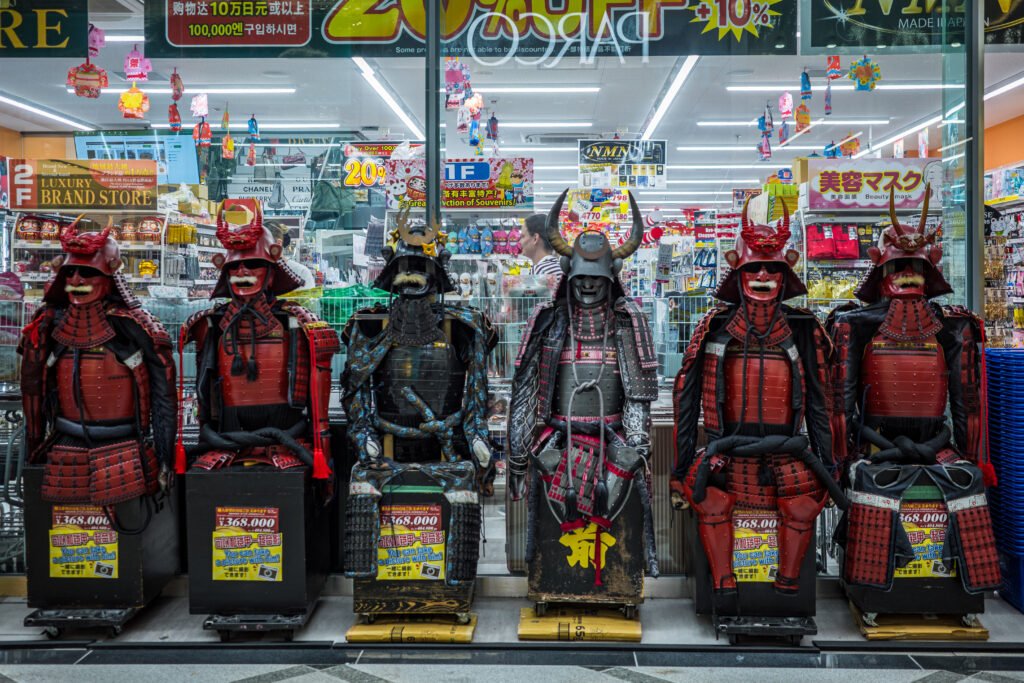
    Many of the stores are now trying to attract foreign tourists, who have become more plentiful. I saw a lot of Osaka t-shirts for sale, and places where women can dress up in a kimono or where anyone can dress up as a Samurai warrior and have their picture taken. (I didn’t know Samurai warriors had white mustaches.)

    It’s interesting what the Japanese choose to display about their culture when the audience is foreign tourists. It’s an amplification and distortion, springing from the natural tendency (or, in the case of merchants, the need) to show people what they want to be shown.

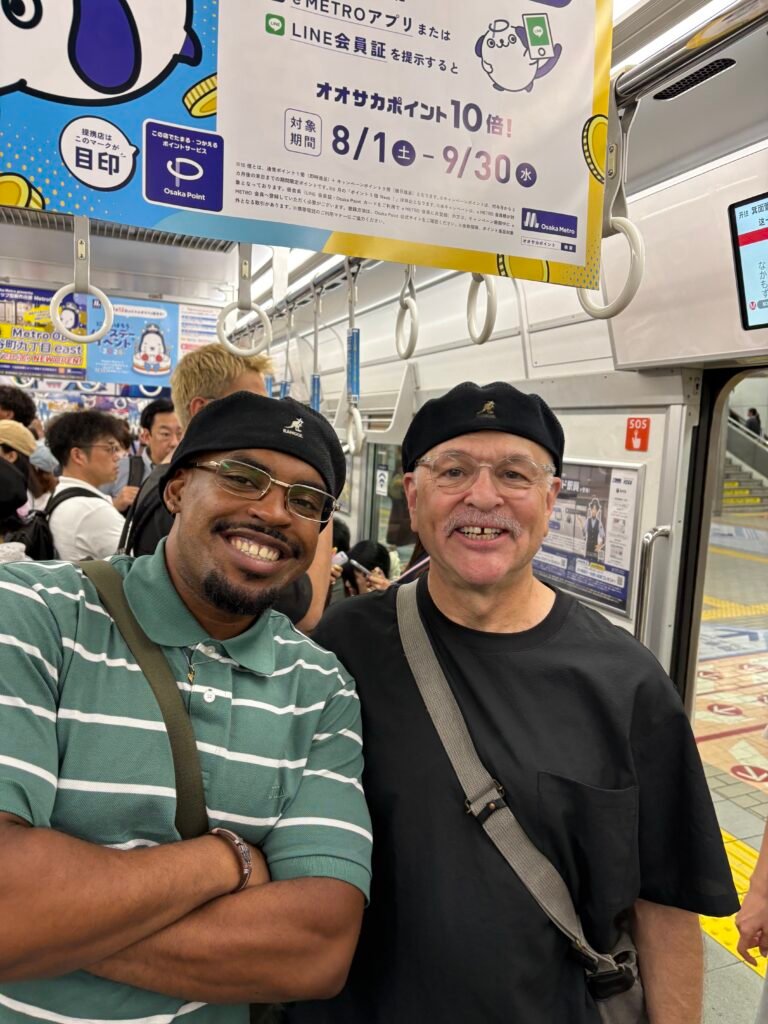
    At the subway station on the way back to Umeda I met two French tourists who had just arrived for a month’s vacation in Japan. I struck up a conversation because one of them was wearing a Kongol cap identical to mine. His friend took a photo of us.

    They were very excited to be in Japan and asked me what foods in Osaka I recommended, and what they should see. As for food, I recommended the Osaka street food staples: takoyaki, okonomiyaki, ramen, and kushikatsu. As for what see, I highlighted a couple of music clubs, Teasin’ (blues), and Royal Horse (jazz). They took notes! I could tell they were good guys who were set to enjoy themselves. I said goodbye and wished them well as they hauled their luggage up the stairs.

    I like foreign tourists — especially those who have good taste in hats.

    ***