

Nearly every day I see something that’s strange and funny, like a Playboy scarecrow.
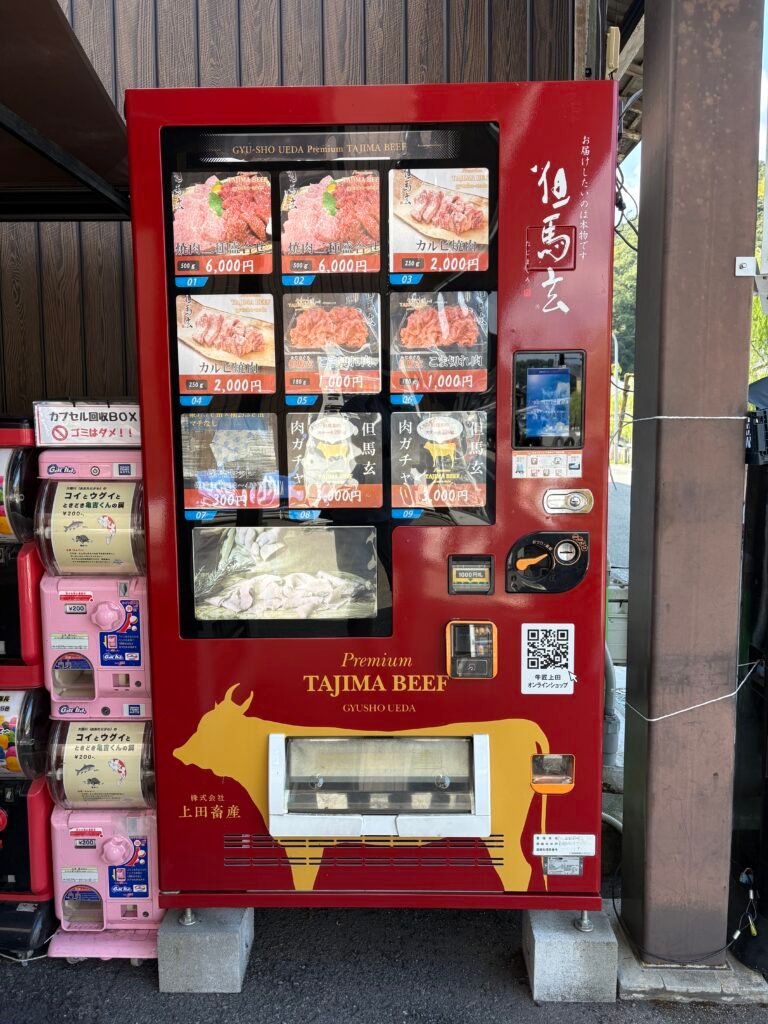
Or a vending machine that dispenses meat.
Ok, Tajima beef is really good. It’s actually the origin of the more famous Kobe beef. People in Tajima are rightly proud of it, so why shouldn’t they distribute it via vending machines so that the whole world can enjoy it? After all, you can buy an entire bento box meal from a vending machine in Japan, as well as beer and sake to wash it down. I could sustain myself in Japan entirely on what I can buy from vending machines and Lawson. Maybe I’ll try it for a week and write about it here.
I don’t know if the people who put that beef vending machine out there on the street had a laugh when they did it, but I suspect not. Yet to me, as a foreigner with wired-in ironic distance, it’s unavoidably strange and funny.
In some cases (like the Playboy scarecrow) it’s clear to me that Japanese people are being consciously whimsical. And in some cases, perhaps something even deeper is going on. You don’t have to be a foreigner to laugh at this sliding board, or wonder why it has two ways to slide down but no way to climb up.
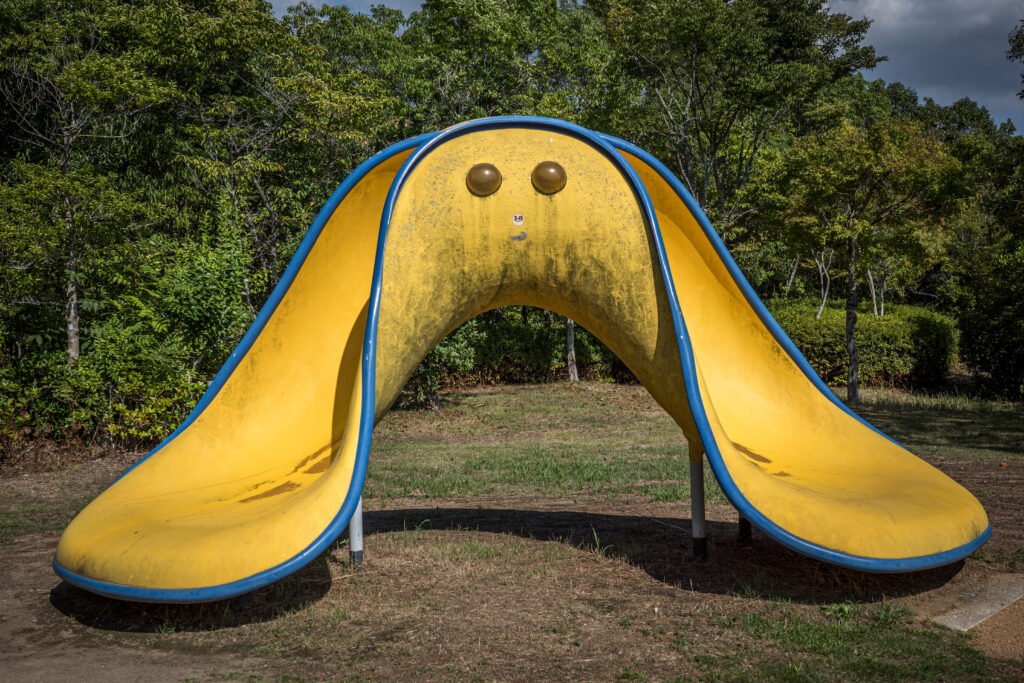
Could it be a metaphor for the inherent absurdity of life, being subliminally introduced to Japanese children through the medium of playground equipment? “But Andy” — I can hear people saying, paraphrasing Freud — “sometimes a sliding board is just a sliding board.” To which I would retort, “Yes, and note that Freud said ‘sometimes.’”
I suppose it is sometimes true that the strangeness I perceive in Japan is as much in me as in the things I perceive. For example, this truck seems strange to me: out of place and yet entirely at home.
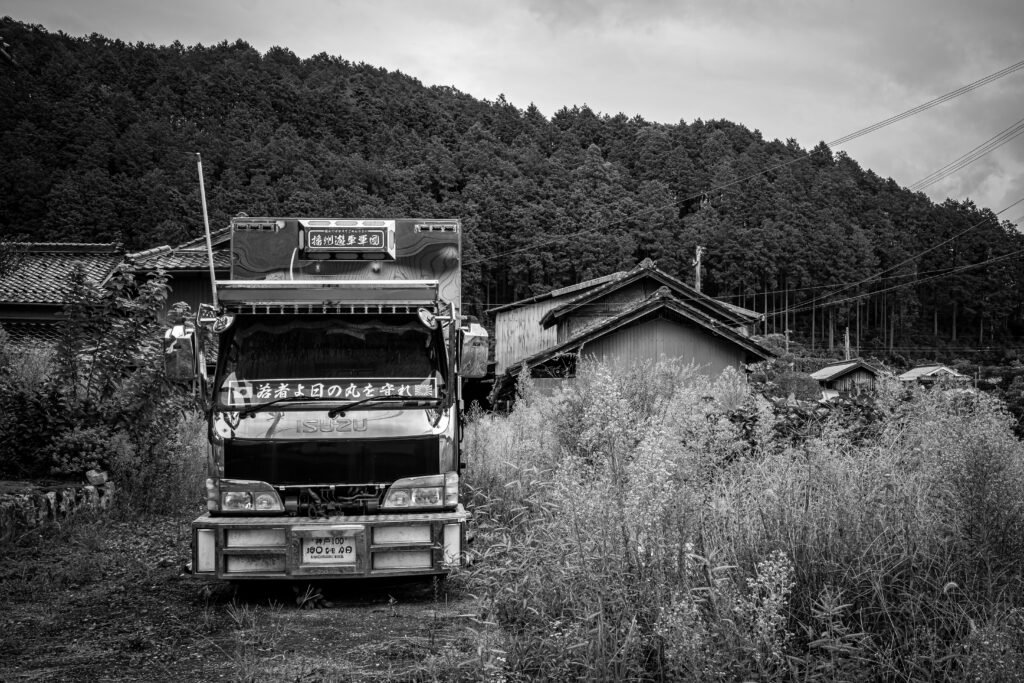
Of course, as a foreigner living here, I often experience a combination of feeling out of place and at home. Freud would say that I’m projecting my own sense of estrangement onto the truck. Maybe so. But what I’d say to Dr. Freud is, sometimes a strange truck is just a strange truck.
I hope it always feels this way to live in Japan.